You drop your phone, spill coffee on your shirt, and miss the bus all in the same morning. You text a friend about it, and their reply is just “FML.” No further explanation needed, right? But if you’re new to texting slang, those three letters can look a little confusing at first glance.
People search for “fml meaning in text” because this abbreviation shows up constantly in texts, tweets, memes, and captions, usually right after something has gone wrong. It’s one of the most recognizable pieces of internet slang out there, but plenty of people still aren’t 100% sure what it stands for or how strong the meaning actually is.
In this guide, you’ll learn exactly what FML means, how it’s used across different platforms, real examples pulled from everyday texting, where the term came from, and the small mistakes people make when using it. By the end, you’ll know exactly when it’s okay to type it and when it’s better to leave it out.
Quick Answer
FML stands for “F*** My Life.” It’s an internet slang expression used to react to frustrating, embarrassing, or unlucky situations, ranging from minor annoyances to genuinely bad days. It’s usually used with humor, though it can also express real frustration depending on the tone.
What Does “FML” Mean?
FML is short for “F*** My Life,” a phrase people use to vent about something going wrong. It’s a censored abbreviation of a swear word, so while the language behind it is explicit, the way people actually use it is often lighthearted rather than genuinely angry.
Most of the time, FML pops up right after someone describes a small disaster: spilling a drink, missing an alarm, tripping in public, or dealing with an awkward moment. It works as a quick way to express “this is so annoying” without writing out a whole paragraph.
While the literal phrase sounds intense, the tone behind FML is usually more exaggerated than serious. People use it the same way they might roll their eyes or sigh dramatically, more about expressing frustration in a relatable way than actually cursing at their life.
That said, context still matters. Occasionally, FML shows up during genuinely upsetting situations, where the tone shifts from humorous to sincerely frustrated or overwhelmed.
Meaning in Different Contexts
FML’s core meaning stays consistent, but how intensely it’s used, and how seriously it should be taken, can shift depending on where you see it.
Everyday Conversation
In regular texting between friends, FML usually follows a small complaint or funny mishap. It works as a quick reaction rather than a deep expression of despair.
Text Messages
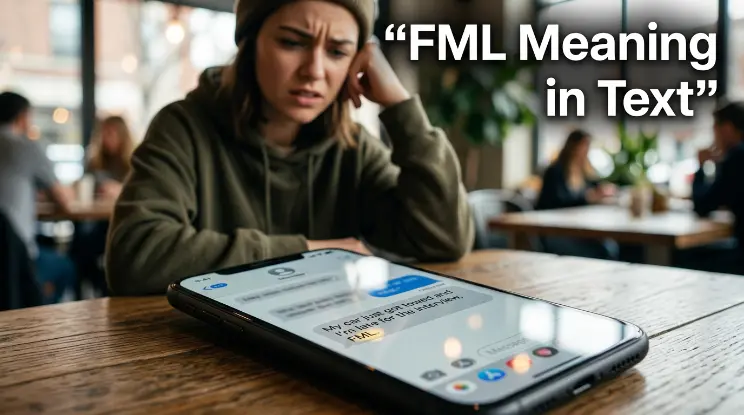
In SMS chats, FML often appears at the end of a message describing something that went wrong, like “Overslept and missed my interview. FML.”
Social Media
On Twitter/X and Facebook, FML is commonly used in posts about relatable frustrations, paired with humor to make an annoying situation feel a little lighter.
In WhatsApp group chats, FML often shows up when someone shares a story about their day going sideways, prompting sympathy or jokes from friends.
Snapchat
On Snapchat, FML frequently appears in captions alongside a photo of something going wrong, like a spilled drink, a parking ticket, or a bad hair day.
In Instagram captions and comments, FML often adds a self-deprecating, humorous tone to posts about awkward or unlucky moments.
TikTok
TikTok comment sections are full of FML reactions under videos showing relatable fails, mishaps, or “why does this always happen to me” moments.
Gaming
In gaming chats, FML often shows up after a frustrating loss or unlucky moment during a match, expressing quick exasperation without breaking the flow of the game.
Professional Communication
FML should be avoided in professional or formal messages entirely. Because it’s built around a swear word, it can come across as unprofessional or inappropriate in workplace settings.
Internet Slang
Within internet slang, FML sits alongside similar expressions like “ugh” and “smh,” all used to express frustration quickly, though FML carries a stronger emotional punch due to its origin.
Examples of “FML”
Here are five real-life examples showing how FML actually gets used.
1. Sentence: “Just missed my train by two minutes. FML.” Meaning: Expressing frustration over bad timing. Situation: Venting to a friend about a stressful commute.
2. Sentence: “Spilled coffee all over my laptop. FML 😭” Meaning: Reacting to an annoying accident with humor. Situation: Posting about a mishap on social media.
3. Sentence: “Forgot my umbrella and it’s pouring. FML.” Meaning: Light frustration over bad luck. Situation: Texting a friend while stuck in the rain.
4. Sentence: “Lost the match in the last second… FML.” Meaning: Exasperation after an unlucky loss. Situation: Reacting to a frustrating moment during a game.
5. Sentence: “Failed the test I studied all week for. FML.” Meaning: Genuine disappointment, not just a joke this time. Situation: Venting after receiving bad news.
When Do People Use “FML”?
People typically use FML to react to frustrating, awkward, or unlucky situations, whether big or small. It shows up most often in casual texting, social media captions, and comment sections, especially among teens and young adults.
People reach for FML when they want to:
- Vent about a small inconvenience or mishap
- React with humor to something embarrassing
- Express genuine frustration during a rough day
- Bond with friends over relatable bad-luck stories
- Add emotional emphasis to a quick text or caption
FML works well in casual, informal settings among friends. It should always be avoided in professional communication, formal writing, or conversations with people who might find explicit language inappropriate, since the phrase behind it does include a swear word.
Different Meanings of “FML”
While the slang meaning dominates online use, FML has one other, unrelated meaning worth knowing.
Meaning 1: F* My Life (Slang)**
- Definition: An expression of frustration, embarrassment, or bad luck.
- Context: Texting, social media, casual conversation.
- Example: “Locked myself out of my apartment. FML.”
Meaning 2: Family and Medical Leave Act (Legal/Workplace Term)
- Definition: In workplace or HR contexts, FML sometimes refers to the Family and Medical Leave Act, a U.S. law allowing employees job-protected leave for medical or family reasons.
- Context: HR documents, workplace policies, legal discussions.
- Example: “She’s currently out on FML leave following surgery.”
If you’re reading a text message, comment, or caption, the slang meaning applies almost every time. The legal meaning only shows up in specific workplace or HR-related conversations, so it’s rarely a source of real confusion in everyday texting.
Origin of “FML”
FML has roots in general internet slang from the early 2000s, but its popularity exploded thanks to a specific website: FMyLife.com, launched in 2008. The site let users submit short, funny anecdotes about bad days and unfortunate mishaps, all ending with the tagline that inspired the site’s name.
The format caught on quickly. Readers loved the mix of humor and relatability, and the abbreviation spread from the website into everyday texting, forums, and eventually social media platforms like Twitter, Instagram, and TikTok.
Over time, FML shifted from being tied specifically to that website into a standalone piece of internet slang. Meme culture helped push this shift even further, often pairing the phrase with funny images or GIFs to soften its tone and turn it into more of a shared joke than a genuine complaint.
Today, FML is recognized globally as shorthand for frustration, whether serious or exaggerated, and remains one of the most enduring pieces of internet slang from that era.
Similar Words and Alternatives
If you want to express similar frustration without using explicit language, these alternatives carry a similar tone.
- Ugh: A simple, non-explicit way to express annoyance or frustration.
- SMH (Shaking My Head): Used to express disbelief or disappointment, often paired with a frustrating situation.
- Why me: A more spelled-out, dramatic way of expressing bad luck.
- This is terrible: A polite alternative that conveys the same frustration without slang or profanity.
- Rough day: A softer, more neutral way to summarize a bad experience.
While these alternatives get a similar point across, none carry quite the same punch or internet-culture familiarity as FML. Choosing between them usually comes down to how casual the conversation is and who you’re talking to.
Common Mistakes
Mistake 1: Using FML in professional settings. Because FML is built around explicit language, it should never appear in work emails, formal messages, or conversations with people who might be uncomfortable with profanity.
Mistake 2: Assuming it’s always serious. Most of the time, FML is used humorously to react to small inconveniences. Reading too much into it as a sign of real distress isn’t always accurate, though it’s still worth checking in if the context feels genuinely heavy.
Mistake 3: Confusing it with the legal term. In HR or workplace conversations, FML can refer to the Family and Medical Leave Act. Mixing this up with the slang meaning in the wrong setting could cause confusion.
Mistake 4: Overusing it until it loses impact. Using FML for every tiny inconvenience can water down its effect. Saving it for moments that genuinely call for a dramatic reaction keeps it feeling authentic.
Mistake 5: Ignoring the audience. Not everyone is comfortable with explicit slang, even in censored abbreviation form. It’s worth considering who you’re texting before using it casually.
Frequently Asked Questions
What does FML mean in texting?
FML stands for “F*** My Life.” It’s used to express frustration, embarrassment, or bad luck, often with a humorous or exaggerated tone.
Is FML offensive?
FML contains a censored swear word, so it can be considered mildly explicit. It’s generally accepted in casual conversations but should be avoided in professional or formal settings.
Does FML always mean something serious happened?
No. Most of the time, FML is used humorously to react to small, relatable inconveniences rather than genuinely serious problems.
Can FML be used in professional messages?
No, FML should be avoided in professional communication because it references explicit language. The only exception is the unrelated meaning, Family and Medical Leave Act, used in specific HR contexts.
Where did FML come from?
FML gained widespread popularity through FMyLife.com, a website launched in 2008 where users shared short, funny stories about bad days and mishaps.
Who uses FML the most?
FML is popular across a wide range of ages, but it’s especially common among teens and young adults on platforms like Twitter/X, TikTok, and Instagram.
How should I respond if someone texts me “FML”?
It depends on the context. If it seems lighthearted, a joke or laughing response usually works. If it seems like they’re genuinely upset, checking in with a supportive message is a better response.
Conclusion
FML stands for “F*** My Life” and is one of the most recognizable pieces of internet slang used to react to frustrating, embarrassing, or unlucky moments. While the phrase behind it is explicit, most everyday use leans humorous and relatable rather than genuinely serious.
You’ll spot FML most often in texts, social media captions, and comment sections, especially among younger users reacting to relatable bad-day stories. Outside of slang, it also has a completely unrelated meaning in workplace settings, referring to the Family and Medical Leave Act.

Hi, I’m Lucas Morgan, a writer at Meanhubz.com. I enjoy exploring words, phrases, idioms, and everyday expressions and explaining them in simple language. My goal is to create clear, engaging, and useful content that helps readers improve their English, understand meanings easily, and communicate with greater confidence every day.