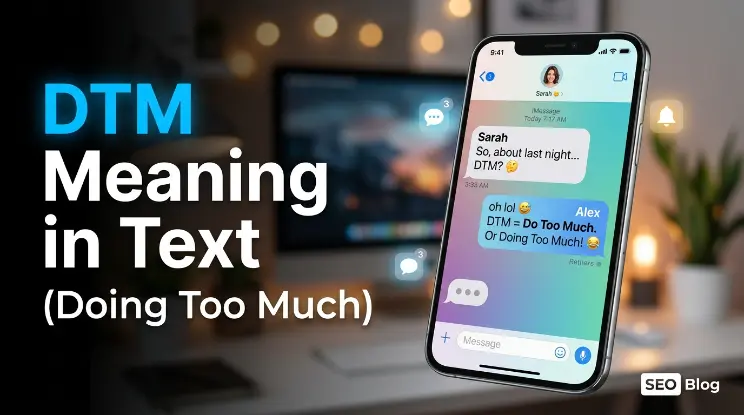
You send a slightly dramatic text, maybe a long paragraph explaining why you’re five minutes late, and the reply comes back as just “dtm.” No further explanation, just three letters and maybe a laughing emoji. It feels like a reaction, but to what exactly?
People search for “dtm meaning in text” because this abbreviation has become one of those sneaky slang terms that packs a lot of attitude into very few letters. It shows up in texts, TikTok comments, and Snapchat captions, usually as a playful callout when someone’s being a little extra. But DTM doesn’t always mean the same thing, and figuring out which version applies depends heavily on context.
In this guide, you’ll learn every common meaning of DTM, how to tell them apart, real examples pulled from everyday conversations, where the term came from, and the mistakes people make when using it. By the end, you’ll never have to pause and wonder what someone meant by “dtm” again.
Quick Answer
DTM most commonly means “doing too much,” used to call out someone who’s being overly dramatic, extra, or putting in way more effort than a situation calls for. It can also mean “dead to me,” “down to meet,” or “don’t text me,” depending on context. Tone and the surrounding conversation reveal which meaning applies.
What Does “DTM” Mean?
DTM is most often short for “doing too much.” It’s used when someone is being dramatic, over-the-top, or overreacting to a situation that probably didn’t need that much energy. Think of it as the digital version of someone saying “relax” or “calm down,” but with a little more sass.
People typically use DTM to gently (or not so gently) call out behavior that feels excessive. That could mean writing a ten-paragraph text to explain a five-minute delay, editing a simple selfie for hours, or getting way too worked up over something small.
While “doing too much” dominates casual use, DTM isn’t locked into one single meaning. Depending on the conversation, it can also mean “dead to me” (expressing that someone has completely lost your trust or interest), “down to meet” (agreeing to hang out or meet up), or “don’t text me” (a blunt way of shutting down communication).
Because all these meanings share the same three letters, reading the full sentence and understanding the relationship between the two people texting is the fastest way to figure out which one is intended.
Meaning in Different Contexts
DTM’s meaning shifts depending on where you see it and what kind of conversation it’s part of.
Everyday Conversation
In casual texting between friends, DTM usually means “doing too much,” typically used to tease someone playfully about overreacting or being dramatic.
Text Messages
In regular SMS chats, DTM can mean several things depending on the message before it. It often follows an overly detailed explanation, or occasionally a blunt statement about no longer wanting contact.
Social Media
On Twitter/X and Facebook, DTM frequently shows up in comments calling out dramatic behavior, over-the-top reactions, or excessive effort put into something small.
In WhatsApp chats, DTM often carries the “down to meet” meaning, especially in conversations about making plans or confirming get-togethers.
Snapchat
On Snapchat, DTM commonly appears in captions poking fun at exaggerated behavior, like an overly dramatic reaction to a small inconvenience.
In Instagram comments and DMs, DTM often calls out someone going overboard with effort, like an elaborate caption for a simple photo or an intense reaction to a minor post.
TikTok
TikTok comment sections use DTM constantly, especially under videos showing relatable examples of someone being “extra” or putting in unnecessary effort.
Gaming
In gaming chats, DTM sometimes shows up casually to mean players are ready to team up or meet inside a match lobby, a more niche use tied to “down to meet.”
Professional Communication
DTM should be avoided in professional or formal messages. Its casual, sometimes blunt tone doesn’t fit workplace communication, regardless of which meaning is intended.
Internet Slang
Within internet slang, DTM sits alongside similar expressions like “extra” and “doing the most,” both of which overlap closely with the “doing too much” meaning.
Examples of “DTM”
Here are five real-life examples showing how DTM shows up in different situations.
1. Sentence: “He wrote a whole paragraph apologizing for being five minutes late. DTM.” Meaning: Doing too much — calling out an overly dramatic reaction. Situation: Reacting to a friend’s exaggerated text.
2. Sentence: “After what he said, he’s DTM now.” Meaning: Dead to me — expressing that trust or interest is completely gone. Situation: Venting about someone who did something upsetting.
3. Sentence: “You free this weekend? DTM if you are.” Meaning: Down to meet — agreeing to hang out or make plans. Situation: Coordinating plans with a friend.
4. Sentence: “Just leave me alone, dtm.” Meaning: Don’t text me — a blunt request to stop communication. Situation: Ending a tense or unwanted conversation.
5. Sentence: “Three hours editing one selfie… DTM 😂” Meaning: Doing too much — playfully teasing excessive effort. Situation: Commenting on a friend’s social media post.
When Do People Use “DTM”?
People typically use DTM in casual, informal conversations, mostly in texting, social media comments, and messaging apps. It’s especially common among teens and young adults who enjoy quick, expressive slang.
People reach for DTM when they want to:
- Call out someone being overly dramatic or excessive
- Express that they’re completely done with someone (“dead to me”)
- Confirm plans or willingness to meet up
- Bluntly ask someone to stop texting them
- Add humor or personality to a casual reaction
DTM fits naturally into relaxed, informal settings among friends or on social media. It’s not appropriate for professional writing, and because its meaning shifts so much by context, it’s worth double-checking the tone of a conversation before assuming which version is meant.
Different Meanings of “DTM”
DTM carries several distinct meanings depending on the situation. Here’s a closer look at each one.
Meaning 1: Doing Too Much
- Definition: Describes someone being overly dramatic, extra, or putting in excessive effort.
- Context: Casual texting, social media, playful callouts.
- Example: “He made a whole slideshow for a group project nobody asked for. DTM.”
Meaning 2: Dead To Me
- Definition: Expresses that someone has completely lost the sender’s trust, respect, or interest.
- Context: Venting conversations, expressing strong disappointment or anger.
- Example: “After that lie, she’s DTM.”
3: Down To Meet
- Definition: Indicates willingness to hang out or meet up.
- Context: Making plans, dating apps, casual scheduling conversations.
- Example: “DTM this weekend if you’re free.”
4: Don’t Text Me
- Definition: A blunt request to stop communication.
- Context: Tense or unwanted conversations.
- Example: “We’re done talking. DTM.”
Reading the sentence before and after “dtm” is the quickest way to figure out which meaning fits. Playful, teasing messages usually point to “doing too much,” while serious or emotional ones point to “dead to me” or “don’t text me.”
Origin of “DTM”
DTM developed the way a lot of internet slang does, as a quick shorthand for phrases people already used constantly in everyday speech and typing. “Doing too much” in particular grew popular in online communities where calling out exaggerated behavior, whether humorously or critically, became a common form of casual commentary, especially on platforms like Twitter, TikTok, and Instagram.
The “down to meet” meaning likely developed somewhat separately, rooted in dating culture and casual planning conversations, where short, efficient communication is especially valued.
Over time, all these meanings settled into the same three letters, with context doing the work of separating them. This kind of layered meaning is fairly common in modern internet slang, where abbreviations often develop inside smaller social circles before spreading to a wider audience and picking up additional interpretations along the way.
There’s no single confirmed origin point for DTM. Like most organic slang, it spread gradually through repeated use across texting, social media, and casual conversation rather than being introduced by one specific event or platform.
Similar Words and Alternatives
If DTM comes up often in your conversations, these related terms carry similar meanings depending on which version of DTM is being used.
- Extra: A close synonym for “doing too much,” used to describe over-the-top behavior.
- Doing the most: Nearly identical in meaning to “doing too much,” often used interchangeably.
- Over it: A more direct alternative to “dead to me,” expressing similar frustration or disinterest.
- DTF plans / Down to hang: Alternatives to “down to meet,” used similarly when confirming plans.
- Leave me alone: A clearer, non-slang way to express the “don’t text me” meaning of DTM.
While these alternatives capture similar ideas individually, none carry the same flexibility as DTM. That flexibility is exactly why paying attention to tone and context matters so much when reading it.
Common Mistakes
Mistake 1: Assuming DTM always means the same thing. Since DTM can mean “doing too much,” “dead to me,” “down to meet,” or “don’t text me,” assuming only one interpretation applies can lead to a completely wrong read on the message.
Mistake 2: Missing the emotional weight behind serious uses. While “doing too much” is often playful, “dead to me” and “don’t text me” usually reflect genuine frustration or hurt. Responding with humor in those cases can come across as dismissive.
Mistake 3: Using DTM in professional messages. DTM is casual slang across all of its meanings and doesn’t belong in workplace emails or formal writing.
Mistake 4: Confusing it with similar-looking abbreviations. Terms like “DTF” or “TMI” look similar at a glance but mean completely different things. Double-checking context helps avoid awkward misreadings.
Mistake 5: Overusing it without context. Sending a lone “dtm” with no explanation can leave the other person unsure which meaning you intend. Adding a little context helps the message land clearly.
Frequently Asked Questions
What does DTM mean in texting?
DTM most commonly means “doing too much,” used to describe someone being overly dramatic or putting in excessive effort. It can also mean “dead to me,” “down to meet,” or “don’t text me” depending on context.
Is DTM rude?
It depends on the meaning intended. “Doing too much” is usually playful, while “dead to me” and “don’t text me” can sound harsh or serious depending on the situation.
How do I know which meaning of DTM someone intends?
Look at the tone and content of the surrounding conversation. Playful callouts usually mean “doing too much,” while serious or emotional messages usually point to “dead to me” or “don’t text me.”
Can DTM be used in professional messages?
No, DTM is casual slang across all of its meanings and should be avoided in professional or formal communication.
Where did the “doing too much” meaning of DTM come from?
It grew popular in online communities, especially on Twitter, TikTok, and Instagram, where users often call out exaggerated or over-the-top behavior in a playful or critical way.
Who uses DTM the most?
DTM is especially popular among teens and young adults on platforms like TikTok, Snapchat, and Instagram, though its meanings are recognized across a wide range of ages online.
What should I reply if someone sends just “dtm”?
If the meaning isn’t clear from context, it’s fine to ask directly, like “dtm about what?” to clarify before responding further.
Conclusion
DTM is a flexible abbreviation most commonly used to mean “doing too much,” calling out dramatic or excessive behavior in a playful way. Depending on the conversation, it can also mean “dead to me,” “down to meet,” or “don’t text me,” each carrying a very different tone.
You’ll spot DTM most often in texts, social media comments, and casual chats, especially among younger users. Because its meaning depends so heavily on context, reading the full conversation is the fastest way to figure out which version someone intends.

Hi, I’m Ethan Carter, a writer at Meanhubz.com. I enjoy explaining words, phrases, slang, and everyday expressions in a simple and engaging way. My goal is to help readers understand language clearly, improve their English, and communicate with confidence through practical examples and easy-to-follow explanations.