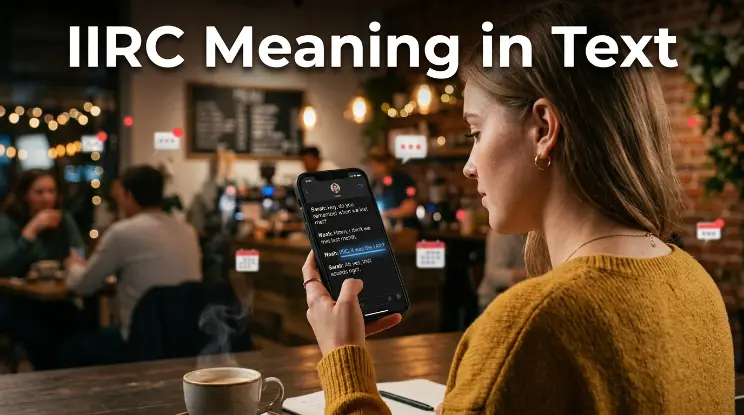
Someone’s telling a story or answering a question, and right before the details, they type “iirc.” It’s not a word you’d learn in school, but it shows up constantly in group chats, Reddit threads, and online discussions. If you’re not familiar with it, it can look like a random string of letters.
People search for “iirc meaning in text” because this abbreviation is everywhere online, especially in conversations where someone’s sharing information from memory rather than a confirmed fact. Unlike a lot of flashier slang, IIRC has a pretty practical purpose: it helps people sound accurate without overpromising.
In this guide, you’ll learn exactly what IIRC stands for, how it’s used across different platforms, real examples from everyday conversations, where the term came from, and the small mistakes people make when using it. By the end, you’ll be using it naturally in your own texts and chats.
Quick Answer
IIRC stands for “if I recall correctly” (or “if I remember correctly”). It’s used to preface a statement someone believes is true but isn’t entirely certain about, adding a polite bit of uncertainty to information shared from memory.
What Does “IIRC” Mean?
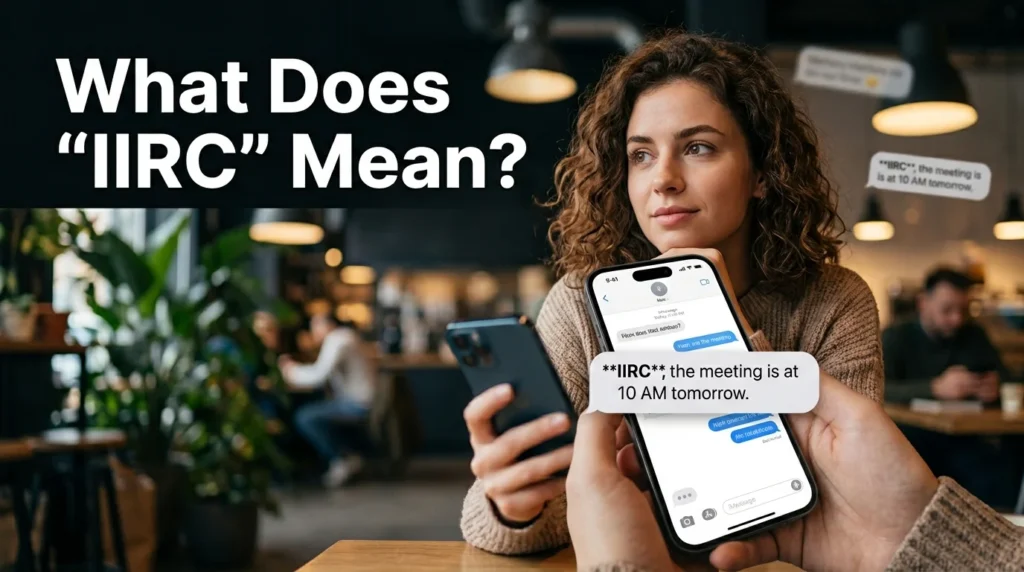
IIRC is short for “if I recall correctly,” a phrase people use when sharing something from memory that they’re fairly confident about, but not 100% sure of. It works as a small verbal disclaimer, letting the listener know the information might not be perfectly accurate.
Instead of stating something as a hard fact, adding IIRC softens the statement a little. It’s similar to saying “I think” or “as far as I know,” just condensed into a quicker, more efficient form for typing.
You’ll often see IIRC placed right before or after the detail someone’s unsure about, like “IIRC, the meeting was on Monday” or “the movie came out in 2015, iirc.” Either way, it signals the same thing: this is my best memory, but don’t take it as gospel.
Because it’s a genuinely useful phrase rather than just casual flair, IIRC tends to show up in a wider range of settings than more playful slang, including semi-formal conversations and online discussions where accuracy matters.
Meaning in Different Contexts
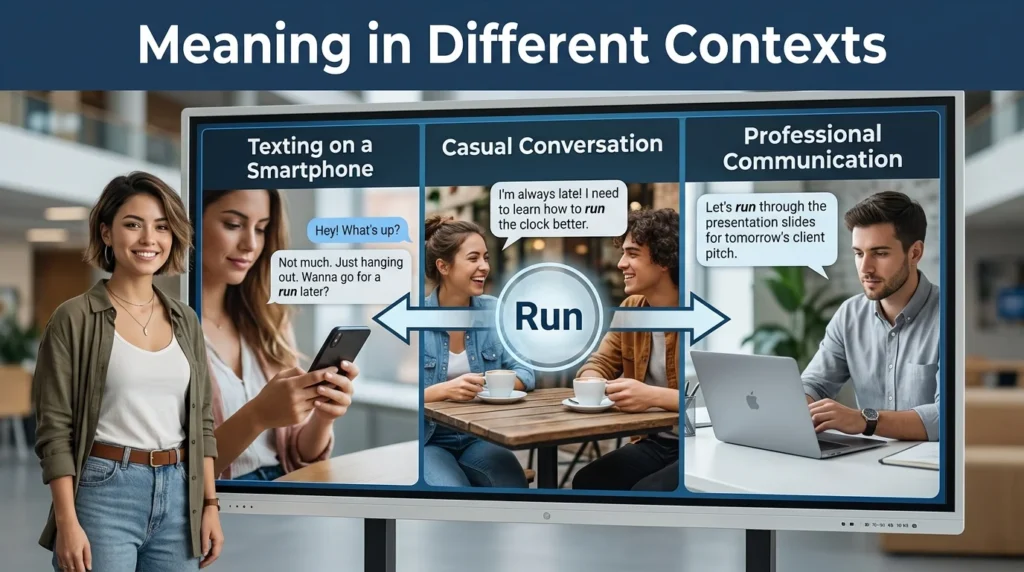
IIRC’s meaning stays exactly the same everywhere it’s used, but the type of conversation it shows up in can vary quite a bit.
Everyday Conversation
In casual texting between friends, IIRC often pops up when someone’s recalling a shared memory or detail they’re not fully certain about, like a date, name, or event.
Text Messages
In regular SMS chats, IIRC is commonly used to soften a statement, especially when answering a question based on memory rather than confirmed information.
Social Media
On platforms like Reddit and Twitter/X, IIRC shows up constantly in comment threads, especially when someone’s contributing a fact or detail they’re recalling rather than looking up.
In WhatsApp group chats, IIRC often helps clarify plans or shared memories, like confirming a time or location someone’s not entirely sure about.
Snapchat
IIRC appears less frequently on Snapchat compared to other platforms, since its more practical, information-focused tone doesn’t fit as naturally into quick, disappearing messages.
On Instagram, IIRC occasionally shows up in comments or DMs when someone’s referencing a detail from a post or conversation they’re not fully certain about.
TikTok
In TikTok comments, IIRC is used similarly to other platforms, often when someone’s adding a fact-check style comment based on memory rather than a confirmed source.
Gaming
In gaming chats, IIRC frequently shows up when players are recalling game mechanics, strategies, or details from memory, especially in discussions or forums about specific games.
Professional Communication
Unlike a lot of internet slang, IIRC can work in casual professional messages, like team chats or internal discussions, since it politely signals uncertainty without sounding unprofessional. It’s still best avoided in formal reports or official documents.
Internet Slang
Within internet slang, IIRC sits alongside similar hedging phrases like “AFAIK” (as far as I know) and “FWIW” (for what it’s worth), all used to soften statements shared without full certainty.
Examples of “IIRC”
Here are five real-life examples showing how IIRC actually gets used in conversation.
1. Sentence: “IIRC, the meeting was moved to Monday.” Meaning: Sharing a detail from memory, with some uncertainty. Situation: Confirming plans in a group chat.
2. Sentence: “The book was published in 2010, iirc.” Meaning: Offering a fact based on memory rather than certainty. Situation: Answering a trivia-style question among friends.
3. Sentence: “IIRC, we already talked about this yesterday.” Meaning: Recalling a previous conversation without full certainty. Situation: Clarifying whether a topic was already discussed.
4. Sentence: “Wasn’t the restaurant closed on Sundays, iirc?” Meaning: Asking for confirmation while hedging on memory. Situation: Planning where to eat with friends.
5. Sentence: “IIRC, Tolkien originally wanted the trilogy to be one book.” Meaning: Sharing a piece of trivia from memory. Situation: Discussing a book or movie in a casual conversation.
When Do People Use “IIRC”?
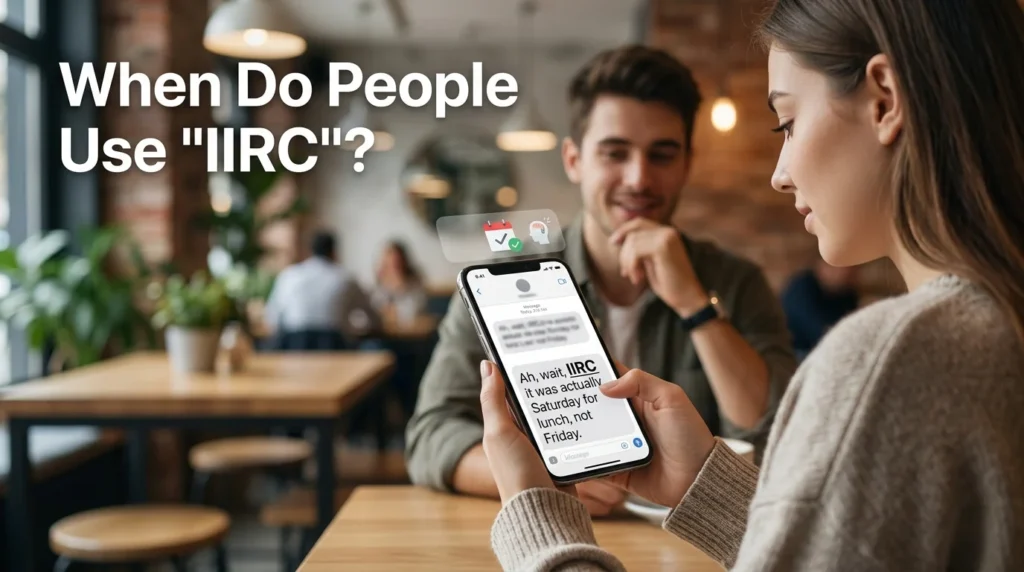
People typically use IIRC when they want to share information from memory without claiming full certainty. It’s common in texting, online forums, social media comments, and even casual workplace chats.
People reach for IIRC when they want to:
- Share a fact or detail they’re fairly confident about, but not certain
- Politely hedge a statement instead of stating it as fact
- Recall shared memories or previous conversations
- Contribute to a discussion without overcommitting to accuracy
- Sound more careful and precise in casual writing
IIRC fits naturally into everyday texting, online discussions, and even semi-formal workplace conversations, since it’s a genuinely useful way to signal uncertainty. It’s less common in flashy social media captions, but it’s widely understood across most digital spaces.
Different Meanings of “IIRC”
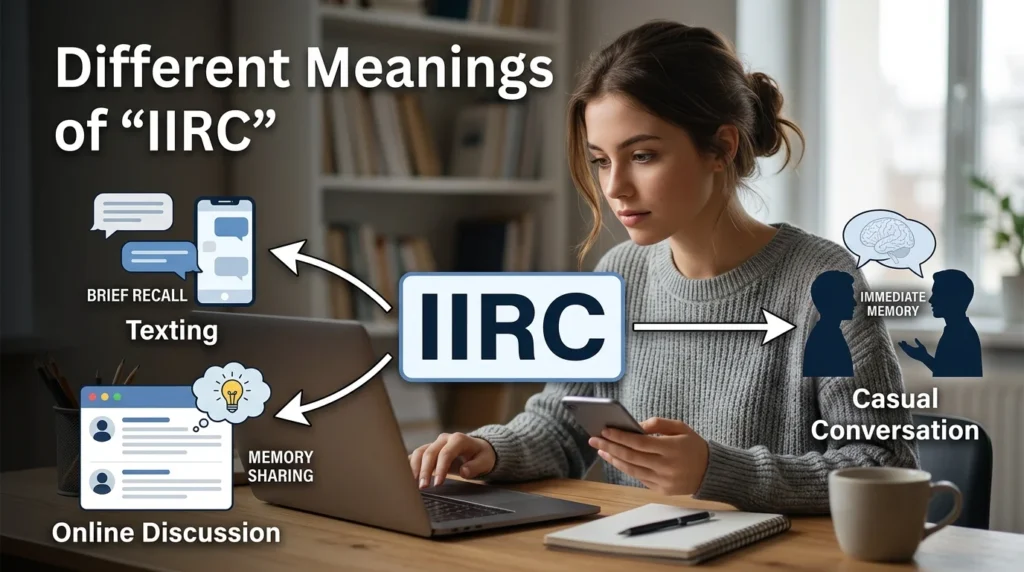
IIRC doesn’t really carry multiple unrelated meanings the way some slang terms do. Its meaning stays consistent, though it’s worth noting a couple of rare points of confusion.
Meaning 1: If I Recall Correctly (Primary Meaning)
- Definition: Used to preface a statement shared from memory, acknowledging possible inaccuracy.
- Context: Texting, forums, casual and semi-professional conversations.
- Example: “IIRC, she said she’d be here around 6.”
Meaning 2: If I Remember Correctly (Same Meaning, Different Wording)
- Definition: Functionally identical to “if I recall correctly,” just a slightly different phrasing.
- Context: Used interchangeably with the primary meaning.
- Example: “If I remember correctly, iirc, we already fixed that bug.”
Rare Confusion: IRC
- Definition: IRC (Internet Relay Chat) is a completely different, unrelated term referring to an early internet chat protocol.
- Context: Sometimes mistaken for IIRC due to similar letters.
- Example: “He’s been active on IRC channels since the 90s.” (unrelated to memory or recollection)
For nearly all everyday texting and online conversation, IIRC simply means “if I recall correctly,” with no real ambiguity once you know the abbreviation.
Origin of “IIRC”
IIRC traces back to the early internet forum and chatroom era of the 1990s. During this time, typing was slower and online communication was almost entirely text-based, which made abbreviations especially useful for saving time and effort.
Early internet communities, including newsgroups and forums, popularized IIRC as a quick way to share information while acknowledging that memory isn’t always perfectly reliable. It offered a polite middle ground between stating something as fact and not contributing at all.
As online communication evolved through instant messaging, social media, and modern texting, IIRC carried over smoothly, remaining just as useful today as it was in its earliest internet forum days. Its longevity comes largely from its practicality, unlike more playful slang, IIRC serves a genuinely helpful communication purpose that hasn’t gone out of style.
Similar Words and Alternatives
If IIRC comes up often in your conversations, these related phrases carry a similar meaning.
- AFAIK (As Far As I Know): Used similarly to hedge a statement, though it focuses more on general knowledge than specific memory.
- FWIW (For What It’s Worth): Used to offer information without claiming authority or certainty.
- I think: A simple, non-abbreviated way to express the same kind of uncertainty.
- From what I remember: A fully spelled-out alternative that works well in more formal writing.
- Correct me if I’m wrong, but…: A more conversational way to express the same hedging tone as IIRC.
While these alternatives express similar uncertainty, IIRC remains one of the most efficient and widely recognized ways to hedge a statement in casual digital conversation.
Common Mistakes
Mistake 1: Confusing IIRC with IRC. IRC (Internet Relay Chat) is a completely different term referring to an old chat protocol, unrelated to memory or recollection. Double-checking context avoids mixing these up.
Mistake 2: Using IIRC when you’re actually certain. IIRC signals uncertainty, so using it for something you’re fully confident about can unintentionally make your statement sound less reliable than it is.
Mistake 3: Overusing it in formal writing. While IIRC works fine in casual workplace chats, it’s better to write out “if I recall correctly” in formal reports, emails, or official documents.
Mistake 4: Assuming it’s rude or dismissive. IIRC is actually a polite phrase, used to soften a statement rather than come across as careless or dismissive. Misreading its tone as negative is a common mistake for newcomers.
Mistake 5: Ignoring the uncertainty it signals. Since IIRC explicitly flags a statement as possibly inaccurate, treating that information as a confirmed fact afterward can lead to real misunderstandings.
Frequently Asked Questions
What does IIRC mean in texting?
IIRC stands for “if I recall correctly.” It’s used to share information from memory while acknowledging it might not be completely accurate.
Is IIRC rude or dismissive?
No, IIRC is actually a polite way to hedge a statement. It signals humility about memory rather than dismissiveness or carelessness.
Can IIRC be used in professional settings?
Yes, IIRC works well in casual workplace chats and internal discussions. For formal reports or official documents, it’s better to write out the full phrase instead.
Is IIRC the same as IRC?
No, these are unrelated. IIRC means “if I recall correctly,” while IRC refers to Internet Relay Chat, an early internet communication protocol.
Where did IIRC come from?
IIRC originated in early internet forums and chatrooms during the 1990s, where quick, text-based communication made abbreviations especially useful.
Who uses IIRC the most?
IIRC is widely used across a broad range of ages, especially in online forums, gaming communities, and casual texting where sharing information from memory is common.
How should I respond if someone texts me “IIRC”?
You can simply treat the information as their best recollection rather than a confirmed fact. If accuracy matters, it’s completely fine to ask them to double-check or verify.
Conclusion
IIRC stands for “if I recall correctly” and works as a polite, practical way to share information from memory while acknowledging it might not be perfectly accurate. Unlike a lot of flashier internet slang, its purpose is genuinely functional, helping conversations stay honest about the limits of memory.
You’ll spot IIRC most often in texts, online forums, social media comments, and even casual workplace chats, used across a wide range of ages and settings. Its meaning stays consistent everywhere, making it one of the more straightforward pieces of internet slang to learn.

Hi, I’m Ethan Carter, a writer at Meanhubz.com. I enjoy explaining words, phrases, slang, and everyday expressions in a simple and engaging way. My goal is to help readers understand language clearly, improve their English, and communicate with confidence through practical examples and easy-to-follow explanations.