You’re wrapping up a conversation, or maybe you’re busy and can’t chat right now, and someone drops “tmp” at the end of their message. It’s short, it’s easy to miss, and if you haven’t seen it before, it can leave you wondering whether it’s even a real word or just a typo.
People search for “tmp meaning in text” because this abbreviation pops up in casual texting, social media comments, and gaming chats, usually as a quick, low-key request. It’s not one of the flashiest slang terms out there, but it’s genuinely useful once you know what it means, and it shows up more often than you’d expect once you start noticing it.
In this guide, you’ll learn exactly what TMP stands for, how its meaning shifts depending on where you see it, real examples from everyday conversations, where the term came from, and the small mix-ups people run into when using it. By the end, you’ll know exactly how to use it and respond to it naturally.
Quick Answer
TMP most commonly means “text me please” in casual texting, used to ask someone to send a message. In technical or work contexts, it usually stands for “temporary,” referring to something short-term or non-permanent. The setting you see it in usually makes the meaning clear.
What Does “TMP” Mean?
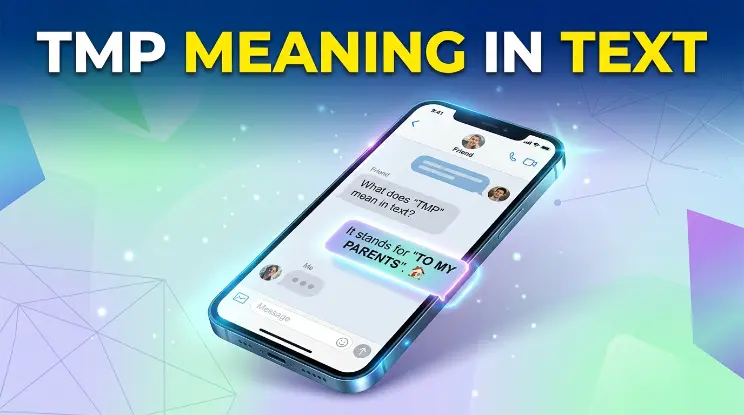
In everyday texting, TMP is short for “text me please.” It’s a quick, low-pressure way of asking someone to send a message, either to continue a conversation or to reach out at a better time.
The phrase feels a little softer than simply saying “text me.” Adding “please” in shorthand form makes the request feel more casual and friendly rather than blunt or demanding, which is probably part of why it caught on in everyday chat.
Outside of casual texting, TMP takes on a completely different meaning. In technical, gaming, or workplace contexts, it usually stands for “temporary,” referring to something short-term, like a temporary file, password, or situation.
Because these two meanings are so different, context makes it pretty easy to tell them apart. A friendly text ending in “tmp” is almost always a request to be messaged, while a “tmp” folder on a computer or a “tmp” role at work refers to something temporary instead.
Meaning in Different Contexts
TMP’s meaning shifts depending on where you encounter it, though the two main interpretations rarely overlap in a confusing way.
Everyday Conversation
In casual texting between friends, TMP almost always means “text me please,” often used when someone’s busy but still wants to keep the conversation going later.
Text Messages
In regular SMS chats, TMP typically shows up at the end of a message, like “Can’t talk now, TMP tonight,” signaling a request to follow up later.
Social Media
On platforms like Twitter/X and Instagram, TMP occasionally appears in comments or replies when someone wants to move a conversation to a more private message.
In WhatsApp chats, TMP is used the same way as regular texting, a quick, casual way to ask someone to send a follow-up message.
Snapchat
On Snapchat, TMP commonly means “text me please,” often used when someone wants to continue a conversation outside of disappearing snaps.
In Instagram comments and DMs, TMP sometimes shows up when someone wants to move a public conversation into a private message instead.
TikTok
On TikTok, TMP is less common in comments compared to other slang, but it can appear when someone asks a creator or another user to reach out directly.
Gaming
In gaming chats, TMP is often used to ask teammates to message when they’re free, without interrupting the flow of a match with a longer explanation.
Professional Communication
In workplace or technical settings, TMP almost always means “temporary,” commonly seen in file names, project statuses, or IT-related discussions.
Internet Slang
Within casual internet slang, TMP sits alongside similar phrases like “hmu” (hit me up) and “lmk” (let me know), all used to request follow-up communication.
Examples of “TMP”
Here are five real-life examples showing how TMP shows up in different situations.
1. Sentence: “In a meeting right now, TMP later.” Meaning: Text me please — asking for a follow-up message. Situation: Letting a friend know you’ll respond once you’re free.
2. Sentence: “This looks amazing! TMP so we can chat about it.” Meaning: Text me please — moving a public comment to a private message. Situation: Reacting to a social media post.
3. Sentence: “TMP when you’re ready to team up.” Meaning: Text me please — coordinating with a teammate during a game. Situation: Gaming chat between players.
4. Sentence: “The file is saved under a tmp folder for now.” Meaning: Temporary — referring to a short-term file location. Situation: A workplace or tech-related conversation.
5. Sentence: “It’s a tmp fix until we sort out the real issue.” Meaning: Temporary — describing a short-term solution. Situation: Discussing a quick workaround at work or in a project.
When Do People Use “TMP”?
People typically use TMP in casual, low-key conversations, mostly in texting, social media, and messaging apps. It’s a softer, friendlier way of asking someone to follow up, without sounding too direct or demanding.
People reach for TMP when they want to:
- Ask someone to message them later
- Politely request a follow-up during a busy moment
- Move a public conversation into a private message
- Coordinate quickly in gaming chats
- Refer to something short-term or non-permanent, in technical settings
The “text me please” meaning fits naturally into casual, friendly conversations. The “temporary” meaning belongs almost exclusively in technical, professional, or gaming contexts, so the setting usually makes the intended meaning obvious.
Different Meanings of “TMP”
TMP carries two main meanings depending on where it’s used. Here’s a closer look at each one.
Meaning 1: Text Me Please
- Definition: A casual, friendly request asking someone to send a message.
- Context: Texting, social media, gaming chats.
- Example: “Running late, TMP if plans change.”
Meaning 2: Temporary
- Definition: Refers to something short-term, non-permanent, or provisional.
- Context: Technical, workplace, or IT-related conversations.
- Example: “This is just a tmp password until you set your own.”
Meaning 3: Too Much Pressure (Less Common)
- Definition: Occasionally used to express feeling overwhelmed or stressed.
- Context: Casual, emotional conversations, mostly among younger users.
- Example: “This week has been tmp honestly.”
If you’re reading a casual text, “text me please” is by far the most likely meaning. In technical or work-related writing, “temporary” applies almost every time.
Origin of “TMP”
TMP developed the way a lot of texting abbreviations did, as a natural shortcut during the early days of mobile texting when character limits and slower typing made brevity valuable. Alongside well-known shortcuts like BRB (be right back) and TTYL (talk to you later), TMP emerged as a quick way to request a follow-up message without spelling everything out.
As texting habits shifted onto social media, group chats, and gaming platforms, TMP carried over naturally into those spaces as well, keeping its core meaning intact throughout.
The “temporary” meaning of TMP has a completely separate history, rooted in computing and technical language, where “tmp” has long been used as shorthand for temporary files, folders, and system processes. This technical use predates a lot of texting slang and remains standard in programming and IT contexts today.
Because these two meanings developed in very different spaces, casual texting and computing, they’ve mostly stayed contextually separate rather than causing widespread confusion.
Similar Words and Alternatives
If TMP comes up often in your conversations, these related terms carry a similar meaning depending on context.
- HMU (Hit Me Up): A close alternative to “text me please,” used the same way to request a follow-up message.
- LMK (Let Me Know): Similar in spirit, often used when asking someone to respond once they have an update.
- Temp: A more spelled-out, informal version of the “temporary” meaning of TMP.
- Provisional: A more formal alternative to TMP’s technical meaning, often used in professional writing.
- Text me: A more direct, non-abbreviated version of TMP’s casual meaning.
While these alternatives capture similar ideas individually, TMP remains a handy shortcut precisely because it fits so naturally into both casual and technical conversations without much overlap or confusion.
Common Mistakes
Mistake 1: Assuming TMP always means “text me please.” While it’s the most common meaning in casual texting, TMP almost always means “temporary” in technical or workplace contexts. Reading the setting helps avoid misinterpretation.
Mistake 2: Using TMP in professional messages expecting the casual meaning. In work emails or technical discussions, TMP is understood as “temporary,” not as a request to be texted. Mixing these up can create confusion.
Mistake 3: Confusing TMP with similar-looking abbreviations. Terms like “TMI” (too much information) look similar at a glance but mean something completely different. Double-checking context avoids awkward misreadings.
Mistake 4: Overusing it in formal writing. Even in its “temporary” meaning, TMP is still fairly casual shorthand. In polished professional writing, spelling out “temporary” is usually a better choice.
Mistake 5: Ignoring tone in emotional contexts. While rare, “too much pressure” is a real, if uncommon, use of TMP. Missing this meaning in an emotional conversation could come across as dismissive.
Frequently Asked Questions
What does TMP mean in texting?
TMP most commonly means “text me please,” a casual way of asking someone to send a follow-up message. In technical contexts, it usually means “temporary” instead.
Is TMP rude or demanding?
No, TMP is generally seen as a friendly, low-pressure way to ask for a follow-up message, softer in tone than simply saying “text me.”
How do I know which meaning of TMP is intended?
Context makes it clear almost every time. Casual texting and social media point to “text me please,” while technical, work, or gaming discussions usually mean “temporary.”
Can TMP be used in professional messages?
The “temporary” meaning is completely appropriate in professional or technical writing. The “text me please” meaning, however, is too casual for formal communication.
Where did TMP come from?
The “text me please” meaning grew out of early mobile texting culture, alongside similar shortcuts like BRB and TTYL. The “temporary” meaning comes separately from computing and technical language.
Who uses TMP the most?
TMP is used across a wide range of ages, though the casual “text me please” meaning is especially common among younger texters on social media and gaming platforms.
What should I reply if someone sends “tmp”?
If it’s a casual conversation, simply follow up with a text when you’re able to. If the context feels technical or work-related, they most likely mean something temporary rather than asking to be texted.
Conclusion
TMP is a simple but genuinely useful abbreviation with two main meanings. In casual texting, it almost always means “text me please,” a friendly way to ask for a follow-up message. In technical or workplace settings, it typically means “temporary,” referring to something short-term or provisional.
You’ll spot TMP most often in texts, social media comments, and gaming chats for the casual meaning, and in technical or professional writing for the “temporary” meaning. Because these two meanings rarely overlap, the setting usually makes it easy to tell them apart.

Hi, I’m William Brooks, a writer at Meanhubz.com. I’m passionate about making English words, phrases, idioms, and expressions easy to understand. I create clear, accurate, and engaging content with simple examples to help students, writers, and English learners improve their vocabulary and communicate with greater confidence in everyday life.