If you’ve seen “kms” in a text or comment and wanted to understand what it actually means, this guide will walk you through it clearly and responsibly. It’s a term that gets used a lot online, often casually, but it’s rooted in something serious, so it’s worth understanding the full picture.
People search for “kms meaning in text” because the abbreviation shows up frequently in texting and social media, usually as an exaggerated reaction to something embarrassing, frustrating, or overwhelming. It’s important to understand both how it’s commonly used and why it’s worth paying attention to if you see it used sincerely.
In this guide, you’ll learn what “kms” stands for, how it’s typically used in casual conversation, when it might signal something more serious, and how to respond thoughtfully either way.
Quick Answer
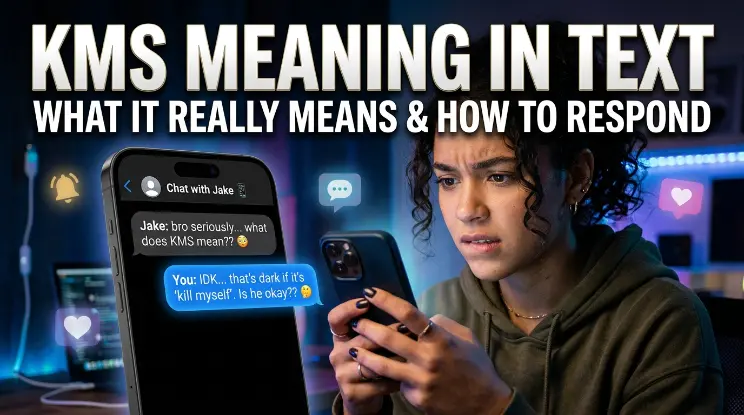
“KMS” stands for “kill myself.” It’s most often used as an exaggerated, hyperbolic reaction to something frustrating, embarrassing, or funny, similar to saying “I can’t even” or “this is killing me.” However, because it references self-harm, it’s worth taking seriously if it ever seems sincere rather than joking.
What Does “KMS” Mean?
“KMS” literally stands for “kill myself.” In most everyday texting and social media use, it’s not meant literally. It functions as an exaggerated expression of frustration, embarrassment, stress, or even humor.
For example, someone might text “kms, I just tripped in front of everyone” after an embarrassing moment. In that context, it works similarly to phrases like “I want to disappear” or “this is so embarrassing I can’t handle it.”
That said, because the phrase directly references self-harm, context always matters. The same three letters can be used lightly among friends or, in rarer cases, express genuine distress.
Meaning in Different Contexts
The tone and intent behind “kms” can shift depending on the situation, the relationship between the people texting, and the platform it’s used on.
Everyday Conversation
In everyday texting, “kms” is typically used as an exaggerated reaction to something stressful or embarrassing, not as a literal statement.
Text Messages
In one-on-one texts, “kms” often follows a funny or frustrating story, used the same way someone might say “I could just die” out loud.
Social Media
On social media, “kms” appears in comments and captions reacting to relatable, cringeworthy, or overwhelming content, almost always in a joking tone.
TikTok and Instagram
On TikTok and Instagram, “kms” shows up frequently in comment sections under funny or embarrassing videos, used as an exaggerated reaction rather than a literal statement.
Gaming
In gaming chats, “kms” sometimes appears after a frustrating loss or mistake, again used hyperbolically to express annoyance rather than literal intent.
When It May Be Sincere
In some cases, “kms” can be used by someone who is genuinely struggling, especially if it appears alongside other signs of distress, sadness, or hopelessness, or if it’s repeated often in a way that feels different from joking. If a message feels heavier than a typical joke, it’s worth checking in directly and gently with the person.
Examples of “KMS”
Here are examples showing the range of how “kms” typically gets used, from lighthearted to more serious.
1. “kms I just called my teacher mom by accident 💀”
- Meaning: Exaggerated embarrassment
- Situation: Reacting to an awkward, funny moment.
2. “this traffic is making me wanna kms”
- Meaning: Exaggerated frustration
- Situation: Venting about an annoying, everyday inconvenience.
3. “kms this exam is impossible”
- Meaning: Exaggerated stress
- Situation: Reacting to a difficult or overwhelming task.
4. “kms 😂 I can’t believe that happened”
- Meaning: Exaggerated disbelief or humor
- Situation: Reacting to something funny or unexpected.
5. A friend texts “kms” repeatedly, without humor, alongside messages about feeling hopeless or alone.
- Meaning: Possible genuine distress
- Situation: This is a moment to respond with care, ask how they’re really doing, and encourage them to reach out for support.
When Do People Use “KMS”
Most of the time, people use “kms” the same way they’d use “I’m dying” or “this is killing me,” as an exaggerated way to express frustration, embarrassment, or stress. It’s common among teens and young adults in casual texting and social media comments.
It’s important to recognize the difference between:
- Casual, joking use — reacting to something relatable, funny, or mildly stressful.
- Sincere use — repeated, serious-sounding messages, especially combined with signs of sadness, isolation, or hopelessness.
If there’s ever real uncertainty about whether someone means it seriously, it’s always better to check in directly rather than assume it’s a joke.
Origin of “KMS”
“KMS” grew out of internet and texting culture as an exaggerated expression, following a similar pattern to other hyperbolic phrases like “I’m dead” or “this is killing me,” which aren’t meant literally either. It became especially common in meme culture and casual online comment sections, where dramatic, exaggerated reactions are a normal part of the humor style.
Because it directly references self-harm, though, it’s a term that carries more weight than most casual slang, which is why understanding context is especially important when it’s used.
Similar Words and Alternatives
If you’re looking for less sensitive ways to express similar frustration or embarrassment, here are some common alternatives:
- “I’m dead” – Used to express something is extremely funny or overwhelming, without referencing self-harm.
- “I can’t even” – Expresses being overwhelmed by something funny, frustrating, or stressful.
- “This is killing me” – A common hyperbolic phrase used the same casual way as “kms,” without the same direct wording.
- “I want to disappear” – Sometimes used similarly for embarrassment, though it’s worth being mindful of tone here too.
If you use “kms” casually yourself, it’s worth knowing that some people find it uncomfortable, and choosing a different phrase can avoid unintended concern.
Common Mistakes
One common mistake is assuming “kms” is always harmless joking, even when a message’s tone feels genuinely upset rather than exaggerated for effect.
Another mistake is dismissing or ignoring “kms” when someone seems to be using it sincerely, out of fear of overreacting. It’s always better to check in gently than to assume it’s nothing.
Tip: If you’re ever unsure whether someone means it seriously, a simple, caring check-in like “hey, are you doing okay? that felt different from your usual joking” can open the door for an honest conversation.
Frequently Asked Questions
What does “kms” mean in a text message?
It stands for “kill myself,” but it’s most often used as an exaggerated, joking reaction to something frustrating or embarrassing, not literally.
Is “kms” always meant seriously?
No. In the vast majority of casual texting and social media use, it’s used hyperbolically, similar to saying “this is killing me.”
How can I tell if someone means “kms” seriously?
Look at the overall tone of the conversation. Repeated use, combined with signs of sadness, hopelessness, or isolation, is worth taking seriously and checking in on directly.
What should I do if I think someone is using “kms” sincerely?
Reach out to them directly and gently, ask how they’re really doing, and encourage them to talk to someone they trust or a mental health professional.
Is it okay to use “kms” casually?
It’s common, but since it references self-harm, some people prefer avoiding it. Alternatives like “I’m dead” or “I can’t even” express the same idea without the same wording.
Where is “kms” most commonly used?
It’s most common in casual texting, TikTok and Instagram comments, and gaming chats, especially among teens and young adults.
What if I’m the one struggling and used “kms” seriously?
If you’re having thoughts of self-harm, please reach out to a trusted person or a crisis line right away. You deserve support, and help is available.
Conclusion
“KMS” stands for “kill myself,” but in almost all everyday texting, it’s used as an exaggerated, non-literal way to express frustration, embarrassment, or stress. Context and tone make all the difference in understanding how someone means it.
While it’s usually harmless joking among friends, it’s a phrase worth paying attention to. If a message ever feels different from typical joking, especially if it’s repeated or paired with signs of real distress, checking in with genuine care is always the right move.
If you or someone you know is struggling with thoughts of self-harm, please know that support is available. In the US, you can call or text 988 to reach the Suicide & Crisis Lifeline, available 24/7. If you’re outside the US, please look up your local crisis line or reach out to someone you trust.

Hi, I’m Lucas Morgan, a writer at Meanhubz.com. I enjoy exploring words, phrases, idioms, and everyday expressions and explaining them in simple language. My goal is to create clear, engaging, and useful content that helps readers improve their English, understand meanings easily, and communicate with greater confidence every day.