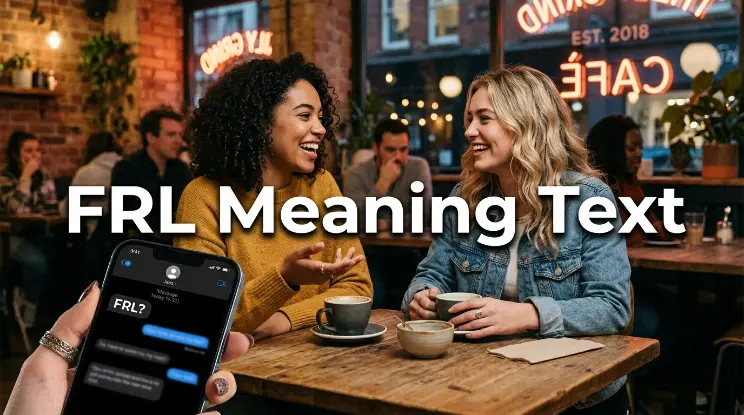
If you’ve ever gotten a text that just says “frl?” and had no idea how to respond, you’re definitely not alone. It’s one of those short forms that pops up constantly in group chats, comment sections, and DMs, but almost nobody stops to explain it. One minute you’re reading a normal conversation, and the next you’re staring at three random letters wondering if you missed some inside joke.
People search for “frl meaning text” because this abbreviation shows up everywhere online, especially among teens and young adults, but it’s rarely spelled out anywhere obvious. It’s common on texting apps, Snapchat, Instagram, TikTok, and Twitter/X, where speed and casual tone matter more than full sentences. Knowing what it means (and when it’s okay to use it) helps you keep up with conversations and avoid replying with something totally off-topic.
In this guide, you’ll learn exactly what FRL stands for, how its meaning shifts depending on where you see it, real examples you can actually use, where the term came from, and the small mistakes people make when using it. By the end, you’ll never have to second-guess a text that ends in “frl” again.
Quick Answer
FRL stands for “for real” (sometimes written out as “for real life”). It’s internet slang used to show that someone genuinely means what they’re saying, to confirm something is true, or to ask if another person is being serious. It works almost exactly like “fr” or “no cap.”
What Does “FRL” Mean?
In plain English, FRL means “for real.” That’s it no hidden meaning, no complicated backstory. It’s just a shortened way of saying “I’m being honest” or “is that actually true?”
Some people expand it slightly to “for real life,” which is basically the same idea with a little extra emphasis tacked on. Either way, the core meaning stays the same: sincerity, truth, and genuine agreement.
The most common way you’ll see FRL used is as a reaction. Someone shares something surprising, funny, or hard to believe, and the reply is a simple “frl?” meaning “wait, seriously?” Or someone agrees strongly with a statement and tosses in “frl” to back it up, almost like nodding your head while typing.
It’s casual, quick, and doesn’t carry any negative or offensive weight. Think of it as digital body language a small verbal nod that says “I mean this.”
Meaning in Different Contexts
FRL doesn’t change its core meaning much across platforms, but how it’s used and why people reach for it can shift depending on where the conversation is happening.
Everyday Conversation
In casual texting between friends, FRL usually pops up as a quick reaction. Someone tells a wild story, and the other person replies “frl?” to ask if it’s actually true. It keeps the conversation flowing without needing a full sentence.
Text Messages
In regular SMS or messaging apps, FRL is almost always used the same way: as a stand-in for “seriously” or “I’m not joking.” It’s short, fast to type, and fits naturally into back-and-forth chats.
Social Media
On platforms like Twitter/X and Facebook, FRL often shows up in comment sections. People use it to react to a post, agree with someone else’s comment, or add emphasis to their own opinion, like “this show is underrated frl.”
Since WhatsApp conversations tend to be more personal and ongoing, FRL here often carries a warmer, more sincere tone. It’s common between close friends or family members confirming plans or feelings genuinely.
Snapchat
On Snapchat, FRL usually appears in captions or chat replies to express honesty or surprise. Because Snapchat conversations move fast and disappear quickly, short slang like FRL fits the platform’s rapid-fire style perfectly.
You’ll spot FRL a lot in Instagram comments and DMs, often reacting to photos, stories, or reels. It’s a quick way to say “this is amazing, no exaggeration” without writing a whole caption.
TikTok
TikTok comment sections are full of FRL. People use it to agree with a video’s message, react to something relatable, or emphasize that a joke or statement hits close to home. It blends naturally with other TikTok slang like “no cap” and “ong.”
Gaming
In gaming chats and voice-adjacent text threads, FRL pops up when players want to confirm something is actually happening, like calling out a strategy or reacting to an unexpected win. It keeps communication quick during fast-paced matches.
Professional Communication
FRL rarely belongs in professional emails or workplace messages. It’s strictly casual slang, so using it with a boss, client, or in formal writing usually comes across as unprofessional.
Internet Slang
Within the broader world of internet slang, FRL sits alongside terms like “fr,” “no cap,” and “ong.” They all serve a similar purpose: adding emphasis and authenticity to short, casual text.
Examples of “FRL”
Here are five real-life examples that show how FRL actually gets used in conversation.
1. Sentence: “That concert was the best night of my life, frl.” Meaning: The person genuinely means it, not exaggerating. Situation: Someone recapping an exciting night to a friend over text.
2. Sentence: “Wait, you got the job?? Frl??” Meaning: Asking if the news is actually true. Situation: Reacting with surprise to unexpected good news.
3. Sentence: “I’m not mad at you frl, I promise.” Meaning: Reassuring someone the statement is sincere. Situation: Clearing up a misunderstanding in a text conversation.
4. Sentence: “This is the funniest video I’ve seen all week, frl.” Meaning: Genuine emphasis, not just casual praise. Situation: Commenting on a TikTok or Instagram reel.
5. Sentence: “Frl though, that movie made me cry.” Meaning: Adding sincerity to an emotional admission. Situation: Chatting with a friend about something touching or unexpected.
When Do People Use “FRL”?
People typically use FRL in casual, low-pressure conversations, mostly through texting, social media comments, and messaging apps. It shows up most often among teens and young adults, since it’s rooted in the same slang culture that brought us “fr,” “lowkey,” and “no cap.”
People reach for FRL when they want to:
- Confirm something is actually true
- Ask if someone else is being serious
- Add sincerity to a compliment or statement
- React with surprise or disbelief
- Keep a conversation feeling casual and quick
FRL fits naturally into friendly, informal settings, but it doesn’t belong everywhere. In professional emails, job applications, or formal messages to teachers or employers, it’s best to skip it entirely and use full words instead. Save it for texts, DMs, and comment sections where a relaxed tone is expected.
Different Meanings of “FRL”
While “for real” is by far the most common meaning, FRL isn’t a one-size-fits-all abbreviation. Depending on where you see it, it can mean something completely different.
Meaning 1: For Real (Slang)
- Definition: Used to express sincerity, agreement, or disbelief.
- Context: Texting, social media, casual conversation.
- Example: “This coffee shop has the best pastries, frl.”
Meaning 2: For Real Life
- Definition: A slightly extended version of “for real,” used the same way but with a bit more emphasis.
- Context: Casual chats, especially among Gen Z.
- Example: “I can’t believe it’s already August, frl life feels like it’s flying by.”
Meaning 3: Filter, Regulator, Lubricator (Technical Term)
- Definition: In engineering and mechanical fields, FRL refers to a combined unit used to prepare compressed air in pneumatic systems.
- Context: Industrial equipment, manufacturing, engineering documents.
- Example: “The technician checked the FRL unit before running the pneumatic press.”
If you’re reading a text message or social media comment, the slang meaning almost always applies. The technical meaning only shows up in specific industrial or engineering contexts, so context is everything here.
Origin of “FRL”
FRL grew out of the same wave of internet slang that gave us abbreviations like LOL, BRB, and OMG. As texting became more popular in the 2000s and character limits on platforms like early Twitter encouraged brevity, people started shortening common phrases to save time and effort.
“For real” was already a well-used spoken phrase long before texting existed, especially in casual American English. As digital conversations sped up, it made sense for people to trim it down into a quick abbreviation.
Social media accelerated its spread. Fast-scrolling platforms like Snapchat, Instagram, and later TikTok created the perfect environment for short, expressive slang to catch on quickly. Once younger users started using FRL in comments and captions, it spread across group chats and eventually became a normal part of everyday texting for many people, regardless of age.
There’s no single moment or platform credited as the “birthplace” of FRL. Like most organic internet slang, it developed gradually through repeated use rather than being invented by one specific person or post.
Similar Words and Alternatives
FRL isn’t the only way to express sincerity or ask for confirmation in a text. Here are some closely related terms:
- FR (For Real): Basically identical to FRL, just one letter shorter. Most people use these interchangeably.
- No Cap: Means “no lie” or “I’m serious.” Slightly more expressive than FRL.
- ONG (On God): Used to swear something is true, often with a bit more intensity than FRL.
- Deadass: Another way to say “seriously” or “I mean it,” popular in casual texting.
- Fr Fr: A doubled-up version of “for real,” used for extra emphasis.
While these terms are all similar, the tone can differ slightly. FRL tends to feel a touch more neutral and versatile, while terms like “deadass” or “no cap” can sound a bit more intense or dramatic depending on the conversation.
Common Mistakes
Mistake 1: Using FRL in formal writing. FRL is strictly casual slang. Using it in emails, cover letters, or professional messages can make your writing seem unpolished. Stick to “genuinely” or “honestly” in formal settings.
Mistake 2: Assuming it always means the same thing. While rare, FRL can refer to a technical term (Filter, Regulator, Lubricator) in engineering contexts. Always consider where you’re seeing it before assuming it’s slang.
Mistake 3: Overusing it in every sentence. Using FRL too often can make it lose its impact. It works best as an occasional emphasis tool, not a constant filler word.
Mistake 4: Confusing it with FYI or FWIW. These abbreviations look similar at a glance but mean completely different things. FYI means “for your information,” and FWIW means “for what it’s worth.” FRL is about sincerity, not information sharing.
Mistake 5: Misreading tone in text. Since text lacks vocal tone, “frl?” can sometimes come across as sarcastic or genuinely curious depending on the conversation. When unsure, it’s okay to ask for clarification.
Frequently Asked Questions
What does FRL mean in texting?
FRL means “for real.” It’s used to show sincerity, confirm something is true, or express surprise about something someone said.
Is FRL the same as FR?
Yes, FRL and FR are essentially the same, with FRL just adding one extra letter for slightly more emphasis. Both are used interchangeably in casual texting.
Is FRL rude or offensive?
No, FRL is a neutral and harmless slang term. It’s simply used to add emphasis or sincerity to a message and doesn’t carry any negative meaning.
Can FRL be used in professional messages?
It’s best to avoid FRL in professional or formal communication. It works well in casual texting and social media, but full words are more appropriate for work-related messages.
Does FRL always mean “for real”?
In casual conversations, yes. However, in technical or engineering contexts, FRL can also stand for “Filter, Regulator, Lubricator,” a piece of pneumatic equipment.
Who uses FRL the most?
FRL is most popular among teens and young adults, especially on platforms like TikTok, Snapchat, and Instagram, though it has spread to wider age groups over time.
How do I respond to “frl?” in a text?
If someone asks “frl?” they’re checking if something is true. You can simply reply “yeah, frl” to confirm, or explain further if they’re asking for more details.
Conclusion
FRL is a simple but widely used piece of internet slang that means “for real,” and sometimes “for real life.” People use it to express sincerity, confirm something is true, or react with surprise to unexpected news. You’ll spot it most often in texts, Snapchat, Instagram, TikTok, and casual online comments, especially among younger users.
While the slang meaning is by far the most common, FRL can occasionally refer to a technical term in engineering contexts, so context always matters. Stick to casual settings when using it, and save formal language for professional messages.

Hi, I’m William Brooks, a writer at Meanhubz.com. I’m passionate about making English words, phrases, idioms, and expressions easy to understand. I create clear, accurate, and engaging content with simple examples to help students, writers, and English learners improve their vocabulary and communicate with greater confidence in everyday life.