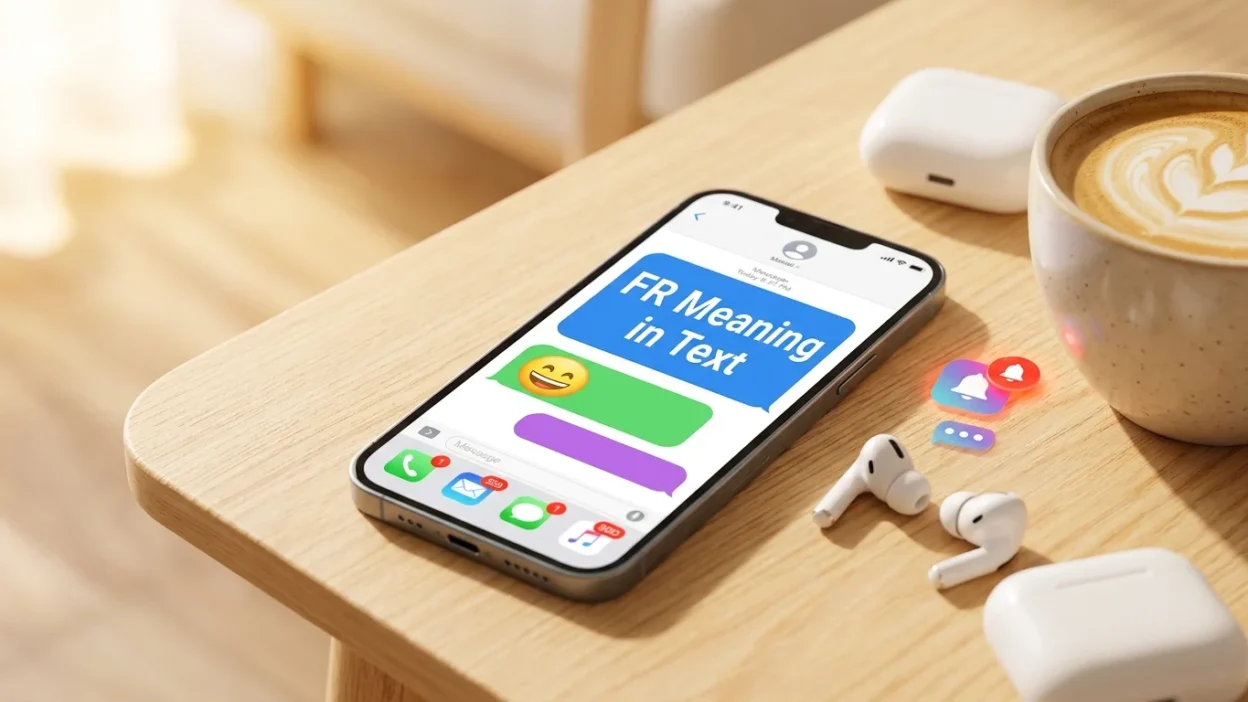
If you’ve seen someone text “fr” and had no idea what it meant, you’re not alone. This short abbreviation shows up constantly in casual texting and social media, usually when someone wants to emphasize that they’re being genuine.
Understanding what fr means in text is simple once it’s explained clearly. It’s a common piece of internet slang people use to add sincerity or agreement to what they’re saying.
In this article, you’ll learn exactly what fr means, how it’s used across different platforms, where it came from, and how to use it correctly yourself. By the end, you’ll be able to spot it and use it with total confidence.
Quick Answer
FR stands for “For Real.” It’s used to emphasize that someone is being honest, to express strong agreement, or to ask if something is actually true. It’s commonly used in texting, Instagram, TikTok, and casual online chats.
What Does “FR” Mean?
FR is a text abbreviation that stands for “For Real.”
In plain English, it’s a way of emphasizing sincerity, agreement, or genuine surprise. It can be used to confirm that something is true, to strongly agree with someone, or to ask a question when you’re unsure if something is actually accurate.
The literal meaning comes directly from the phrase itself: “for” + “real,” shortened into two letters. There’s no hidden meaning behind it it’s simply a faster way to type something people say constantly in casual speech.
The most common way people use fr is either as emphasis at the end of a sentence or as a standalone reaction. For example, “This weather is outrageous fr” adds emphasis, while replying “fr?” alone asks if something is really true.
Meaning in Different Contexts
The core meaning of fr stays the same everywhere, but how it’s used can shift slightly depending on the situation.
Everyday Conversation
In spoken conversation, people commonly say “for real” out loud to express sincerity or disbelief, and fr is simply the written, shortened version used in texting.
Text Messages
Texting is where fr is used the most. It fits naturally into fast, casual conversations where people want to add emphasis or ask if something is genuinely true.
Social Media
On platforms like Twitter/X and Instagram, fr often shows up in comments and captions to emphasize a strong opinion or reaction, like “This song hits different fr.”
In WhatsApp chats, fr is common in casual conversations, especially when friends are agreeing strongly with something or reacting to surprising news.
Snapchat
Snapchat’s fast, informal messaging style makes fr a natural fit for quick reactions or emphasis in captions and chats.
You’ll often see fr in Instagram comments or captions, especially when someone wants to add sincerity to an opinion or reaction.
TikTok
In TikTok comments, fr is extremely common, often used to agree strongly with a video or add emphasis to a reaction, like “This is so relatable fr.”
Gaming
In gaming chats, players use fr to emphasize genuine reactions during matches, such as “That play was outrageous fr.”
Professional Communication
FR is not appropriate for professional emails or workplace messages. It’s considered too casual, and phrases like “truly” or “genuinely” should be used instead in formal settings.
Internet Slang
As part of internet slang, fr belongs to a group of sincerity-focused abbreviations similar to ngl (not gonna lie) and tbh (to be honest), all used to add emphasis or honesty to a message.
Examples of “FR”
Here are real-life examples showing how fr is used in actual conversations.
1. Sentence: “This is the best pizza I’ve ever had, fr.” Meaning: Emphasizing a genuine, strong opinion. Situation: Casual texting about food.
2. Sentence: “Fr? I can’t believe that happened.” Meaning: Asking if something is really true. Situation: Reacting to surprising news.
3. Sentence: “I’m so tired fr, I need a nap.” Meaning: Emphasizing genuine exhaustion. Situation: Venting to a friend about being tired.
4. Sentence: “Fr, that movie made me cry.” Meaning: Confirming a sincere emotional reaction. Situation: Discussing a movie with friends.
5. Sentence: “You’re so right, fr fr.” Meaning: Strongly agreeing with someone (doubled for extra emphasis). Situation: Agreeing enthusiastically in a group chat.
When Do People Use “FR”?
People use fr whenever they want to emphasize sincerity, confirm something is true, or express strong agreement.
Common situations include:
- Adding emphasis to a genuine opinion or feeling
- Asking if something is actually true
- Agreeing strongly with someone
- Reacting to surprising or relatable content
Who uses it: Teens and young adults use fr the most frequently, though it’s widely understood and used across many age groups in casual texting.
Why people use it: It quickly signals sincerity or agreement without needing a longer explanation, and it adds emotional emphasis to a message.
Appropriate situations: Texting friends, casual social media posts, group chats, and informal conversations.
Inappropriate situations: Professional emails, academic writing, formal reports, or messages to teachers, bosses, or clients.
Origin of “FR”
FR grew out of the same texting culture that produced abbreviations like ngl, tbh, and lol, developing as people looked for faster ways to express common phrases while typing.
The phrase “for real” has been used in casual American English speech for decades, especially in hip-hop culture and everyday slang, as a way to emphasize sincerity or ask if something is genuinely true. As texting and instant messaging became popular in the early 2000s, people naturally shortened it to fr to save time and effort.
The abbreviation spread widely through texting apps and later through social media platforms like Twitter, Instagram, and TikTok, where quick, emotional reactions and short expressions are common. The doubled version, “fr fr,” also became popular as an even stronger way to emphasize sincerity.
There’s no single person or exact moment credited with creating fr specifically. Like most internet slang, it developed naturally as digital communication became faster and more casual.
Similar Words and Alternatives
If you want variety instead of always typing fr, here are some alternatives.
- NGL (Not Gonna Lie): Similar in tone, often used interchangeably to introduce an honest statement.
- TBH (To Be Honest): Used more generally to share any honest thought.
- Fr fr: A doubled version of fr, used for even stronger emphasis.
- No cap: A related slang phrase meaning “no lie” or “for real.”
- Genuinely / Truly: More formal alternatives that work in both casual and semi-formal writing.
The main difference between fr and no cap is subtle. Both mean roughly the same thing, but “no cap” specifically emphasizes that someone isn’t lying, while fr more broadly emphasizes sincerity or agreement.
Common Mistakes
Even though fr is simple, people sometimes misuse or misunderstand it.
Mistake 1: Using it in formal writing. FR should never appear in essays, resumes, or professional emails. Use “genuinely” or “truly” instead in formal contexts.
Mistake 2: Overusing it in every sentence. Using fr too often can make messages feel repetitive. It works best when saved for moments that genuinely need emphasis.
Mistake 3: Confusing it with other short abbreviations. Since fr is just two letters, it can occasionally be mistaken for a typo or unrelated abbreviation. Context usually makes the meaning clear.
Tip to avoid confusion: If you’re texting someone unfamiliar with slang, such as an older relative or a non-native English speaker, it’s safer to spell out “for real” the first few times.
Frequently Asked Questions
What does fr mean in a text message?
FR means “For Real.” It’s used to emphasize sincerity, confirm something is true, or express strong agreement.
Is fr the same as ngl?
They’re related but not identical. NGL means “not gonna lie” and introduces an honest statement, while fr emphasizes sincerity or confirms something is genuinely true.
Can I use fr in a professional email?
No, fr is too casual for professional communication. Use “genuinely” or “truly” instead.
Where did fr come from?
FR developed from the spoken phrase “for real,” shortened during the rise of texting and instant messaging culture, and popularized further through hip-hop culture and social media.
Is fr appropriate to use with strangers?
It’s generally fine in casual online conversations, but if you’re texting someone new or unfamiliar with slang, it’s safer to spell out “for real.”
Does fr have more than one meaning?
No, fr consistently means “for real” across texting, social media, and casual conversation, whether used for emphasis or to ask a question.
How do I reply to a text that includes fr?
Just respond naturally to whatever is being emphasized or confirmed. If it’s used as a question (“fr?”), simply confirm or clarify whether it’s true.
Conclusion
FR is a simple, widely used texting abbreviation that means “For Real.” People use it to emphasize sincerity, confirm something is true, or express strong agreement. You’ll find it everywhere from text messages and Instagram comments to TikTok captions and gaming chats.
While fr works great in casual, everyday conversations, it’s best avoided in professional or formal writing, where spelling out “genuinely” or “truly” is more appropriate. Understanding texting abbreviations like fr helps you follow along in digital conversations naturally and communicate more clearly with friends, family, and online communities.

Hi, I’m Ethan Carter, a writer at Meanhubz.com. I enjoy explaining words, phrases, slang, and everyday expressions in a simple and engaging way. My goal is to help readers understand language clearly, improve their English, and communicate with confidence through practical examples and easy-to-follow explanations.