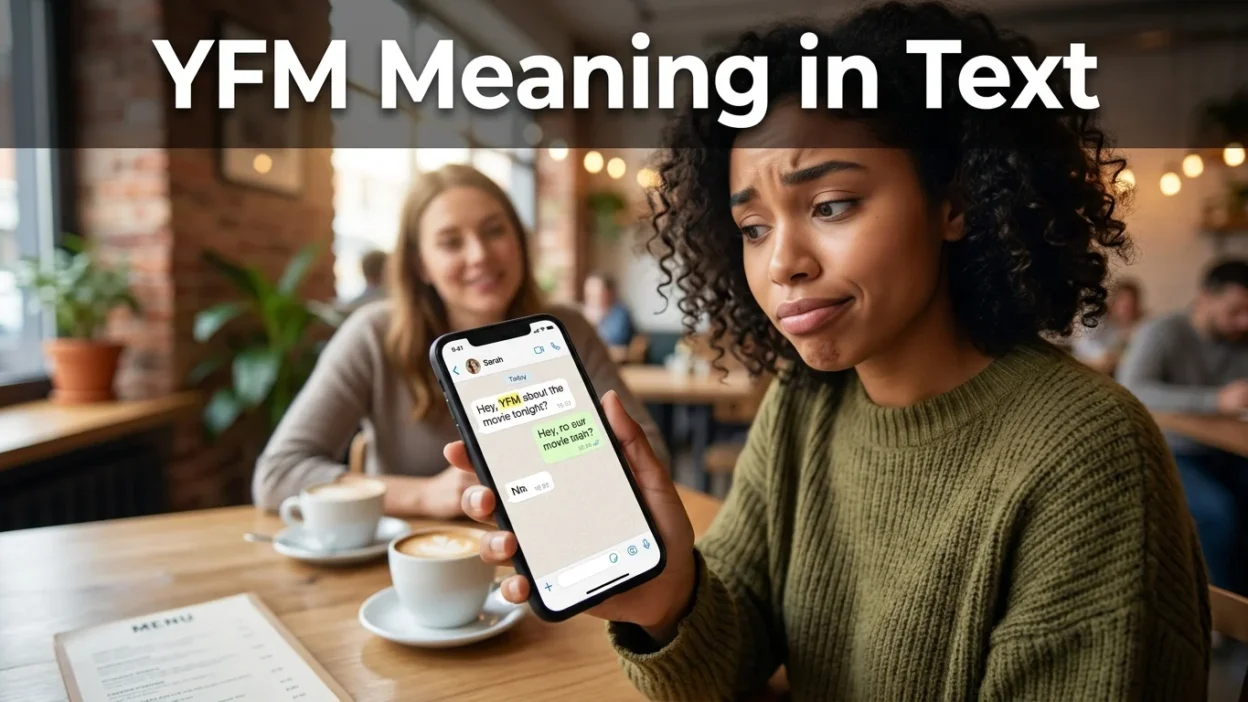
If you’ve seen someone text “yfm” and had no idea what it meant, you’re not alone. This short abbreviation shows up in casual texting and social media, usually when someone wants to check if you understand or agree with them.
Understanding what yfm means in text is simple once it’s explained clearly. It’s a casual texting shortcut people use to ask if someone relates to or understands what they’re saying.
In this article, you’ll learn exactly what yfm means, how it’s used across different platforms, where it came from, and how to use it correctly yourself. By the end, you’ll never have to guess what yfm means again.
Quick Answer
YFM stands for “You Feel Me?” It’s used to ask someone if they understand or relate to what you just said. It’s commonly used in texting, social media comments, and casual online conversations.
What Does “YFM” Mean?
YFM is a text abbreviation that stands for “You Feel Me?”
In plain English, it’s a casual way of checking if someone understands or agrees with what you just said. It works like a shortcut for asking “do you understand?” or “does that make sense?” in a relaxed, conversational tone.
The literal meaning comes directly from the phrase itself: “you” + “feel” + “me,” shortened into three letters. There’s no hidden meaning behind it it’s simply a faster way to type a common check-in phrase.
The most common way people use yfm is at the end of a sentence, after explaining something or sharing an opinion. For example, “I just need some time alone right now, yfm?” checks whether the other person understands that feeling.
Meaning in Different Contexts
The core meaning of yfm stays the same everywhere, but how it’s used can shift slightly depending on the situation.
Everyday Conversation
In spoken conversation, people often say “you feel me?” out loud as a casual way of checking understanding, and yfm is simply the written, shortened version used in texting.
Text Messages
Texting is where yfm is used the most. It fits naturally into casual conversations where someone wants to confirm the other person relates or understands.
Social Media
On platforms like Twitter/X and Instagram, yfm sometimes shows up in captions or comments, especially when someone shares a relatable thought or experience.
In WhatsApp chats, yfm is common in casual conversations between friends, especially when explaining feelings or checking for understanding.
Snapchat
Snapchat’s fast, informal messaging style makes yfm a natural fit for quick check-ins during casual conversations.
You’ll sometimes see yfm in Instagram captions or comments, especially paired with relatable posts about everyday struggles or feelings.
TikTok
In TikTok comments, yfm occasionally appears when reacting to relatable content, like “This is exactly how I feel, yfm?”
Gaming
In gaming chats, yfm is less common but can appear when players want to confirm understanding of a strategy or frustration, such as “That lag is so annoying, yfm?”
Professional Communication
YFM is not appropriate for professional emails or workplace messages. In formal settings, “do you understand?” or “does that make sense?” should be used instead.
Internet Slang
As part of internet slang, yfm belongs to a group of check-in abbreviations similar to “u know?” and “get me?”, all used to confirm understanding in casual conversation.
Examples of “YFM”
Here are real-life examples showing how yfm is used in actual conversations.
1. Sentence: “I just need a break from everything, yfm?” Meaning: Checking if the other person understands the feeling. Situation: Venting to a close friend.
2. Sentence: “That was such an awkward moment, yfm?” Meaning: Asking if someone relates to an experience. Situation: Sharing a story with friends.
3. Sentence: “Sometimes you just need to be alone, yfm?” Meaning: Checking for understanding about needing space. Situation: Casual conversation about personal feelings.
4. Sentence: “I hate when plans change last minute, yfm?” Meaning: Asking if someone relates to frustration. Situation: Venting about a canceled plan.
5. Sentence: “I just want to relax today, yfm?” Meaning: Checking if someone understands the desire to rest. Situation: Casual texting about weekend plans.
When Do People Use “YFM”?
People use yfm whenever they want to check if someone understands or relates to what they’re saying.
Common situations include:
- Sharing personal feelings and checking for understanding
- Relating a frustrating or relatable experience
- Confirming agreement after making a point
- Connecting emotionally in a casual conversation
Who uses it: Teens and young adults use yfm the most frequently, though it’s understood across many age groups familiar with casual texting slang.
Why people use it: It adds a personal, conversational touch to a message while checking that the other person is following along or relating.
Appropriate situations: Texting friends, casual social media comments, and informal group chats.
Inappropriate situations: Professional emails, academic writing, or formal messages, where “do you understand?” should be spelled out fully.
Origin of “YFM”
YFM developed as part of the broader trend of texting abbreviations that grew out of casual American slang and hip-hop culture, where phrases like “you feel me?” have been common in spoken conversation for decades.
As texting and instant messaging became widespread in the early 2000s, people began shortening common conversational phrases to save time and effort. YFM followed the same pattern as other check-in abbreviations, becoming a quick way to type a familiar spoken phrase.
The abbreviation spread through texting culture and later through social media platforms like Twitter, Instagram, and TikTok, where casual, relatable language is common.
There’s no single person or exact origin point credited with creating yfm specifically. Like most internet slang, it developed naturally as people looked for faster ways to express a common spoken phrase in writing.
Similar Words and Alternatives
If you want variety instead of always typing yfm, here are some alternatives.
- U know?: A similar casual check-in phrase with the same general meaning.
- Get me?: Another casual alternative asking if someone understands.
- Know what I mean?: A fuller, slightly more formal alternative.
- Right?: A shorter way to check for agreement, though slightly different in tone.
- Does that make sense?: A clearer, more formal alternative for professional or unfamiliar conversations.
The main difference between yfm and “right?” is subtle. YFM specifically asks if someone understands or relates to a feeling or idea, while “right?” more generally asks for agreement or confirmation.
Common Mistakes
Even though yfm is simple, people sometimes misuse or misunderstand it.
Mistake 1: Using it in formal writing. YFM should never appear in essays, resumes, or professional emails. Always write “do you understand?” or “does that make sense?” in full for formal communication.
Mistake 2: Using it without an emotional or relatable statement first. YFM works best as a follow-up to a feeling, opinion, or experience. Using it randomly without context can confuse the reader.
Mistake 3: Confusing it with unrelated abbreviations. Some beginners confuse yfm with similar-looking texting shortcuts. Double-check context if you’re unsure of the intended meaning.
Tip to avoid confusion: If you’re texting someone unfamiliar with slang, such as an older relative or a non-native English speaker, it’s safer to spell out “you feel me?” the first few times.
Frequently Asked Questions
What does yfm mean in a text message?
YFM means “You Feel Me?” It’s used to ask someone if they understand or relate to what you just said.
Is yfm the same as “u know”?
They’re very similar and often used interchangeably. Both are casual ways of checking if someone understands or relates to a statement.
Can I use yfm in a professional email?
No, yfm is too casual for professional communication. Use “do you understand?” or “does that make sense?” instead.
Where did yfm come from?
YFM developed from the spoken phrase “you feel me?”, common in casual American slang and hip-hop culture, later shortened during the rise of texting.
Is yfm appropriate to use with strangers?
It’s generally fine in casual online conversations, but if you’re texting someone new or unfamiliar with slang, spelling out “you feel me?” is a safer choice.
Does yfm have more than one meaning?
No, yfm consistently means “you feel me?” across texting, social media, and casual conversation.
How do I reply to a text that ends with yfm?
You can simply confirm whether you understand or relate to what they said, such as replying “yeah, totally” or sharing your own similar experience.
Conclusion
YFM is a simple, widely used texting abbreviation that means “You Feel Me?” People use it to check if someone understands or relates to a feeling, opinion, or experience they just shared. You’ll find it in text messages, social media comments, and casual conversations among friends.
While yfm works well in casual, everyday conversations, it’s best avoided in professional or formal writing, where spelling out “do you understand?” is more appropriate. Understanding texting abbreviations like yfm helps you follow digital conversations naturally and communicate more clearly with friends, family, and online communities.

Hi, I’m Ethan Carter, a writer at Meanhubz.com. I enjoy explaining words, phrases, slang, and everyday expressions in a simple and engaging way. My goal is to help readers understand language clearly, improve their English, and communicate with confidence through practical examples and easy-to-follow explanations.