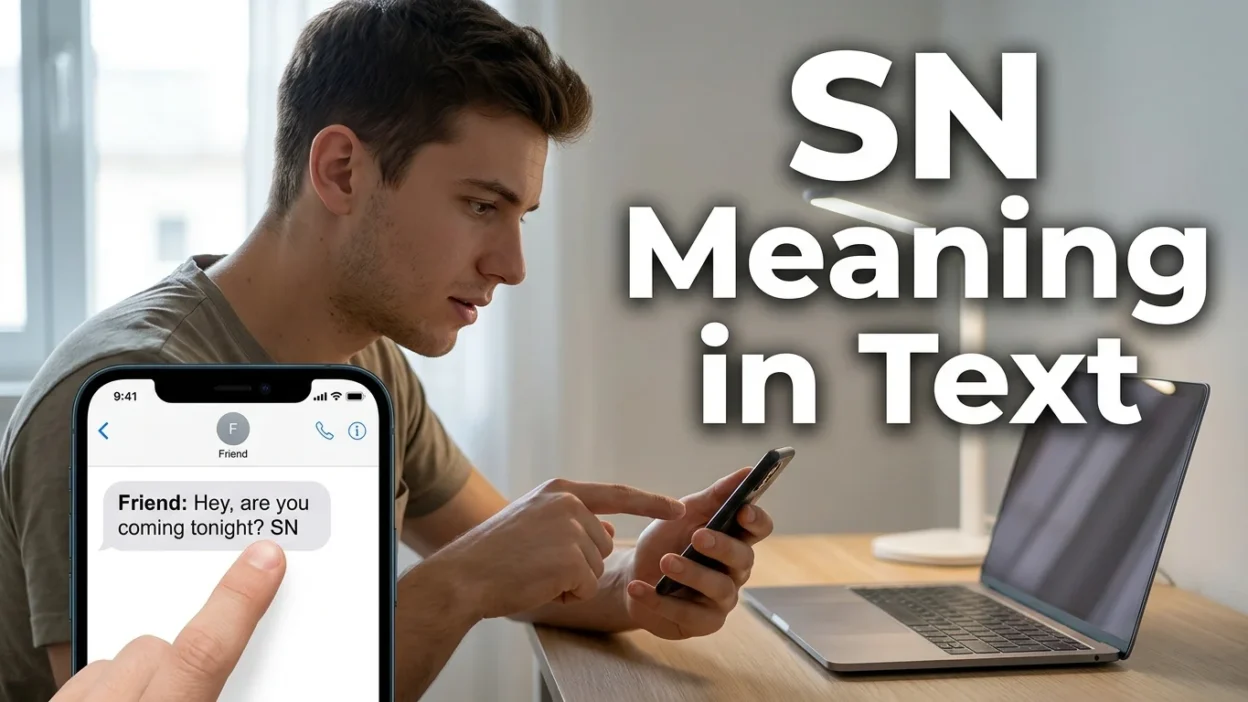
If you’ve seen someone text “sn” and had no idea what it meant, you’re not alone. This short abbreviation shows up in casual chats, gaming platforms, and social media, and because it can stand for a couple of different things, it often leaves people confused.
Understanding what sn means in text is easy once you know the context clues to look for. It’s one of those abbreviations that has been around since the early days of online chatting, and its meaning depends on the situation.
In this article, you’ll learn all the common meanings of sn, how to tell them apart, where the abbreviation came from, and how to use it correctly yourself. By the end, you’ll never be confused by “sn” again.
Quick Answer
SN most commonly stands for “Screen Name,” referring to someone’s username on social media, gaming platforms, or messaging apps. It can also mean “Say Nothing,” used to ask someone to keep a secret or stay quiet about something. The correct meaning depends on the context of the conversation.
What Does “SN” Mean?
SN is a text abbreviation with two widely recognized meanings, which makes context especially important.
In plain English, the most established meaning is “Screen Name,” referring to a person’s username or online handle. This meaning dates back to early internet chat platforms, where people needed a quick way to ask for or share usernames.
The other common meaning is “Say Nothing,” used to ask someone to keep a secret, stay quiet about a topic, or avoid mentioning something to others. For example, “I got you a gift, sn to mom” means don’t tell mom about it.
Because both meanings are still in use today, the best way to understand sn in a message is to look at what the conversation is actually about.
Meaning in Different Contexts
The meaning of sn shifts depending on the platform and topic, so context really matters here.
Everyday Conversation
In spoken conversation, people say “screen name” or “keep it quiet” fully, since sn is a written-only shortcut used mainly in texting and online platforms.
Text Messages
In texting, sn often means “say nothing,” especially when someone is asking another person to keep a secret or avoid mentioning something.
Social Media
On platforms like Twitter/X and Instagram, sn can occasionally mean “screen name” when someone is asking for a username, though it’s less common than it once was.
In WhatsApp chats, sn typically means “say nothing,” especially in group chats discussing surprises, plans, or private information.
Snapchat
On Snapchat, sn most often refers to “screen name,” since usernames play a central role in how people connect and add each other on the platform.
You’ll sometimes see sn in Instagram comments or DMs, usually meaning “screen name” when someone asks for a handle to follow or connect with.
TikTok
In TikTok comments, sn is less common but can appear referring to a username, especially in requests to follow or connect on other platforms.
Gaming
In gaming chats, sn almost always means “screen name,” referring to a player’s in-game username or handle, especially on older platforms and forums.
Professional Communication
SN is generally not recommended in professional emails or workplace messages when used as slang. However, in technical or product contexts, SN can formally stand for “Serial Number,” which is appropriate in business settings.
Internet Slang
As part of internet slang, sn belongs to a group of older abbreviations that originated in early chat rooms and instant messaging platforms like AOL, similar to terms like afk (away from keyboard).
Examples of “SN”
Here are real-life examples showing how sn is used in actual conversations.
1. Sentence: “What’s your sn on that game?” Meaning: Asking for someone’s username. Situation: Coordinating to play a game together.
2. Sentence: “I’m planning a surprise party, sn to Alex.” Meaning: Asking someone to keep a secret. Situation: Group chat planning a surprise.
3. Sentence: “Send me your sn so I can add you.” Meaning: Requesting a screen name to connect online. Situation: Adding a friend on a social platform.
4. Sentence: “Sn, I don’t want anyone else to know yet.” Meaning: Asking for privacy about a topic. Situation: Sharing personal news with a close friend.
5. Sentence: “My sn used to be totally different back in the day.” Meaning: Referring to an old username. Situation: Reminiscing about early internet or gaming days.
When Do People Use “SN”?
People use sn whenever they want to ask for a username or request that something be kept private.
Common situations include:
- Asking for someone’s username on a game or platform
- Requesting privacy about a surprise, secret, or plan
- Reminiscing about old online handles or usernames
- Referring to serial numbers in technical or product conversations
Who uses it: Long-time internet users and gamers are more likely to use the “screen name” meaning, since it dates back to early online chat culture, while the “say nothing” meaning is used more broadly across casual texting.
Why people use it: It’s short, quick to type, and communicates a clear request without needing a longer explanation.
Appropriate situations: Casual texting, gaming chats, and informal conversations among friends.
Inappropriate situations: Professional emails or formal messages, unless referring specifically to a serial number in a technical context.
Different Meanings of “SN”
Since sn has multiple meanings, here’s a breakdown of each one separately.
1. Screen Name (Most Established)
- Definition: A person’s username or online handle.
- Context: Gaming, social media, and early internet chat culture.
- Example: “What’s your sn so I can follow you?”
2. Say Nothing
- Definition: Asking someone to keep quiet or stay silent about something.
- Context: Casual texting, group chats, secret-keeping.
- Example: “Sn, don’t mention this to anyone.”
3. Serial Number
- Definition: A formal identification number for a product or device.
- Context: Technical and business communication.
- Example: “Please provide the SN located on the back of the device.”
Origin of “SN”
The origin of sn traces back to two very different sources, depending on which meaning you’re looking at.
“Screen Name” comes from early internet chat platforms like AOL Instant Messenger and Yahoo Messenger in the late 1990s and early 2000s, where users needed a quick way to ask for or share usernames. As gaming communities grew, the term carried over into online gaming culture as well.
“Say Nothing” developed more from general texting slang, following the same pattern as other abbreviations that shorten common phrases to save time while typing on mobile phones.
The technical meaning, “Serial Number,” existed in manufacturing and business long before texting slang developed, and it remains entirely separate from the casual texting meanings.
There’s no single origin point connecting all these meanings. Like most flexible slang, each developed naturally within its own community and later shared the same short abbreviation.
Similar Words and Alternatives
If you want clarity instead of relying on sn, here are some alternatives.
- Username: A clearer, fully spelled-out alternative to “screen name.”
- Handle: A casual synonym for username, especially common on social media.
- Keep it quiet: A clear alternative to “say nothing” when asking for privacy.
- Don’t tell anyone: A more direct way to request secrecy.
- IGN (In-Game Name): A related gaming-specific alternative to “screen name.”
The main difference between sn and ign is context. SN is a broader term used across many platforms, while ign specifically refers to usernames within video games.
Common Mistakes
Even though sn is short, it’s easy to misuse or misunderstand because of its multiple meanings.
Mistake 1: Assuming there’s only one meaning. Many people assume sn always means “screen name,” but in casual texting, it often means “say nothing” instead.
Mistake 2: Using it in professional settings without context. SN should generally be avoided in workplace emails unless specifically referring to a serial number, since its slang meanings could cause confusion.
Mistake 3: Using it without enough context. Because sn is so short, using it in a vague sentence can leave the other person unsure whether you’re asking for a username or requesting privacy.
Tip to avoid confusion: If there’s any chance your message could be misread, it’s safer to spell out “screen name,” “say nothing,” or your intended meaning fully, especially with people unfamiliar with texting slang.
Frequently Asked Questions
What does sn mean in a text message?
SN most commonly means “Screen Name,” referring to a username. It can also mean “Say Nothing,” used to ask for privacy or secrecy.
How do I know which meaning of sn is being used?
Context is key. If the conversation involves usernames or connecting online, it likely means “screen name.” If it involves a secret or surprise, it likely means “say nothing.”
Can I use sn in a professional email?
Only if you’re referring to a “Serial Number.” If you mean “screen name” or “say nothing,” it’s better to spell out your meaning fully in professional writing.
Where did sn come from?
“Screen Name” originated from early internet chat platforms like AOL Instant Messenger in the late 1990s and early 2000s. “Say Nothing” developed later as part of general texting slang.
Is sn appropriate to use with strangers?
It’s generally fine in casual online conversations, but if you’re texting someone new or unfamiliar with slang, spelling out your intended meaning is a safer choice.
Does sn always mean “screen name”?
No, its meaning depends on context. In casual texting, especially around secrets or surprises, it often means “say nothing” instead.
How do I reply to a text that includes sn?
Look at the surrounding context to determine which meaning is being used, then respond naturally, either by sharing your username or acknowledging the request for privacy.
Conclusion
SN is a flexible texting abbreviation with a couple of established meanings, most commonly “Screen Name,” referring to a username, and “Say Nothing,” used to ask for privacy or secrecy. Because its meaning depends on context, it’s worth paying attention to the conversation before assuming which one applies.
While sn works fine in casual texting, gaming, and social media, it’s best avoided in professional or formal communication unless referring to a serial number. Understanding texting abbreviations like sn, along with the context clues that reveal their meaning, helps you follow digital conversations confidently and communicate clearly with friends, family, and online communities.

Hi, I’m William Brooks, a writer at Meanhubz.com. I’m passionate about making English words, phrases, idioms, and expressions easy to understand. I create clear, accurate, and engaging content with simple examples to help students, writers, and English learners improve their vocabulary and communicate with greater confidence in everyday life.