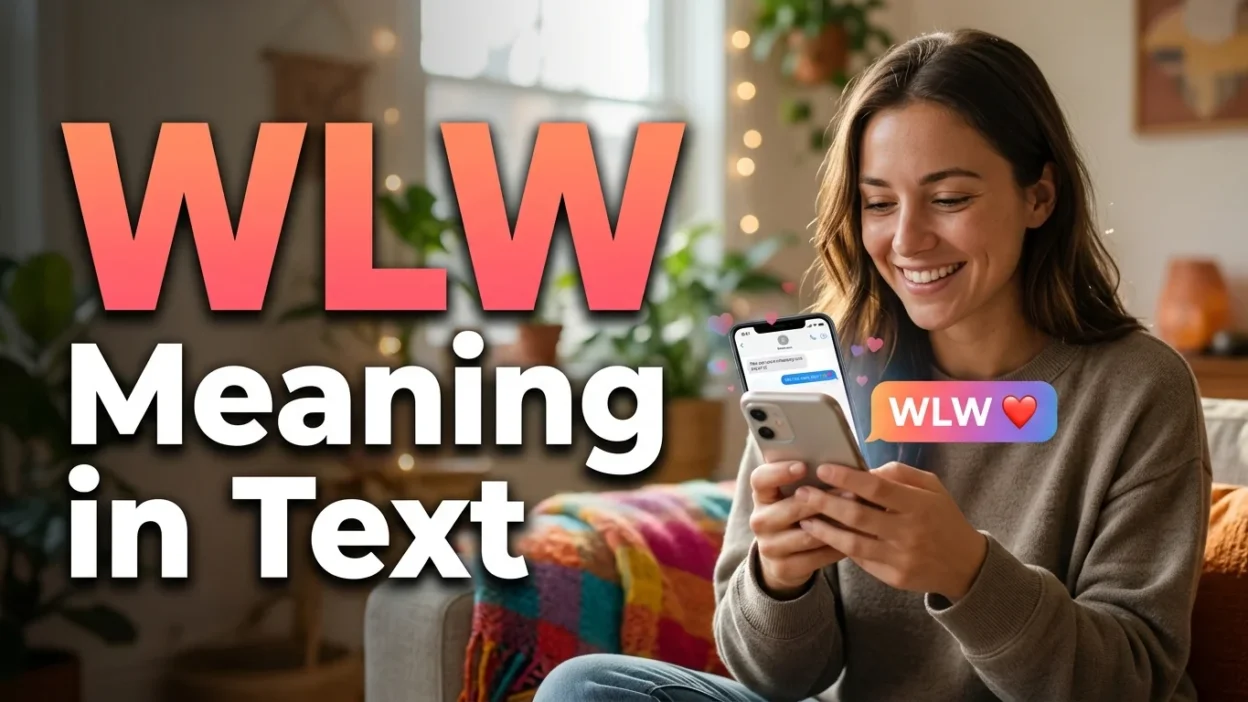
Online conversations often use abbreviations to describe relationships, identities, and shared interests, and WLW meaning in text is especially common in LGBTQ+ communities and social media discussions. WLW stands for “Women Loving Women.” It is an umbrella term that describes women who experience romantic or emotional attraction to other women.
The term can include lesbians, bisexual women, pansexual women, and other women who are attracted to women. You may see WLW on TikTok, Instagram, Tumblr, Reddit, dating profiles, or in conversations about relationships and representation. For example, someone might use the hashtag #WLW when sharing a romantic story, discussing a fictional female couple, or finding content related to women who love women.
Unlike some texting abbreviations that express a reaction or shorten a sentence, WLW generally describes a type of attraction or community. It does not automatically reveal a particular person’s identity, because people may use the term in different ways depending on their own preferences and experiences. Understanding the context can help you interpret it respectfully.
Quick Answer
WLW stands for “Women Loving Women.” It’s an inclusive term used to describe women who are romantically, emotionally, or physically attracted to other women. Unlike a specific label such as “lesbian,” WLW works as an umbrella term that can include bisexual, pansexual, and queer women, focusing on shared attraction rather than one strict identity. It’s used respectfully across texting, social media, and LGBTQ+ community spaces.
What Does “WLW” Mean?
At its core, WLW is short for “Women Loving Women.” It describes women who experience romantic, emotional, or physical attraction to other women.
Unlike casual slang that exists mostly for convenience, WLW carries real identity and community significance. It’s a way for people to describe themselves, their relationships, or the content they relate to without committing to one narrow label.
The letter breakdown is simple:
- W = Women
- L = Loving
- W = Women
Put together, WLW reads exactly as it sounds, describing attraction and relationships between women in a broad, inclusive way. This makes it one of the more meaningful acronyms in modern texting slang, since it represents identity and belonging rather than just a quick reaction or expression.
Meaning in Different Contexts
WLW stays consistent in meaning across most spaces, but how it’s used can shift slightly depending on the setting. Here’s how it typically shows up.
Everyday Conversation
In everyday conversation, WLW is used casually to describe crushes, relationships, or shows and media that reflect attraction between women. It fits comfortably into low-pressure, natural conversation.
Text Messages
In texting, WLW often comes up when friends talk about relationships, attractions, or shared interests, such as recommending a movie or show with WLW representation.
Social Media
On platforms like X (formerly Twitter) and Instagram, WLW frequently appears in bios, captions, and hashtags, often connected to community, representation, and shared experiences.
In WhatsApp chats, WLW is used the same way as regular texting, especially in private conversations between friends discussing relationships or identity.
Snapchat
On Snapchat, WLW may show up in captions or private messages, often used casually to describe a relationship, crush, or shared interest.
Instagram is a major space for the WLW community, where the term appears in bios, captions, and hashtags tied to relationships, representation, and community content.
TikTok
TikTok has a large and active WLW community, where the term is used in captions and comments to describe relationships, media recommendations, or shared experiences, often tagged as “WLW-coded” content.
Gaming
WLW is less common in gaming chats specifically, though it may occasionally appear when players discuss characters, storylines, or representation within games.
Professional Communication
WLW is generally not used in professional or workplace communication, not because it’s inappropriate, but because it’s a casual, community-oriented term that doesn’t typically come up in formal settings.
Internet Slang
Within the wider world of internet slang, WLW sits alongside related terms like “MLM” (Men Loving Men) and “sapphic,” all used within LGBTQ+ online spaces to describe identity, attraction, and community.
Examples of “WLW”
Here are five real-life examples showing how WLW is actually used in conversations.
Example 1 Sentence: “Looking for more WLW friends to talk to 💕” Meaning: Seeking connection with other women who love women. Situation: Someone posts on social media hoping to find community.
Example 2 Sentence: “This movie has such a sweet WLW storyline.” Meaning: The film features a romantic relationship between women. Situation: A friend recommends media with WLW representation.
Example 3 Sentence: “Are you WLW too, or just here for the vibes? 👀” Meaning: Asking if someone identifies within the WLW community. Situation: A casual, friendly question in a group chat or comment section.
Example 4 Sentence: “That scene was so WLW-coded, I loved it.” Meaning: The scene reflects themes or energy associated with women loving women. Situation: Reacting to a show, movie, or piece of media online.
Example 5 Sentence: “Found a great WLW playlist if you want it!” Meaning: A playlist curated around WLW themes or community. Situation: Sharing content related to the WLW community with a friend.
When Do People Use “WLW”?
WLW shows up in fairly specific, meaningful situations connected to identity, relationships, and community.
Common situations include:
- Describing your own identity or attraction
- Talking about a relationship or crush
- Recommending media with WLW representation
- Connecting with community members online
- Describing content, characters, or storylines as “WLW-coded”
Who uses it: WLW is used by women who identify within the term’s umbrella, as well as allies and community members discussing representation, relationships, or content.
Why people use it: It offers a simple, inclusive way to describe attraction and identity without requiring one specific, narrow label.
Appropriate situations: Casual conversations, social media bios and captions, LGBTQ+ community spaces, and discussions about relationships or media representation.
Inappropriate situations: WLW isn’t offensive, but it’s generally too casual and specific for formal or professional communication, where it wouldn’t typically come up anyway.
Different Meanings of “WLW”
WLW doesn’t carry multiple unrelated meanings the way some slang terms do. Its meaning stays consistent, though it’s worth understanding its scope as an umbrella term.
Meaning 1: Women Loving Women (Primary and Only Common Meaning)
- Definition: An inclusive term describing women who are romantically, emotionally, or physically attracted to other women.
- Context: Texting, social media, LGBTQ+ community spaces.
- Example: “I finally found a great WLW book club online!”
Related Concept: WLW as an Umbrella Term Unlike “lesbian,” which refers specifically to women exclusively attracted to other women, WLW is broader. It can include bisexual, pansexual, and queer women, focusing on the shared experience of loving women rather than requiring one exact label.
Origin of “WLW”
WLW developed as part of inclusive language used within online LGBTQ+ communities, advocacy spaces, and identity-focused discussions. It grew naturally out of a need for a simple, respectful way to describe attraction between women without forcing people into one narrow, specific label.
Unlike many internet slang terms that trace back to a specific viral moment or platform trend, WLW’s origin isn’t tied to one single event. It emerged gradually as online communities sought more flexible, inclusive terminology, eventually becoming a widely recognized part of everyday digital vocabulary, especially on platforms like Tumblr, Twitter, TikTok, and Instagram.
Over time, WLW moved beyond just describing personal identity and became a broader cultural tag, used in hashtags, community discussions, and media recommendations. Today, it’s deeply tied to visibility and representation, helping people feel seen and connected within a larger community.
Similar Words and Alternatives
WLW belongs to a family of inclusive identity and community terms used in LGBTQ+ spaces. Here are some related terms and how they compare.
- MLM (Men Loving Men): The equivalent umbrella term describing men attracted to other men.
- Sapphic: A poetic, cultural term often used interchangeably with WLW to describe women attracted to women.
- Queer: A broader umbrella term covering a wide range of non-heterosexual and non-cisgender identities.
- Lesbian: A more specific label referring to women exclusively attracted to other women.
- Bisexual: Describes attraction to more than one gender, which can overlap with the WLW umbrella.
- Pansexual: Describes attraction regardless of gender, which can also overlap with WLW.
The main difference between these terms is specificity. WLW and “sapphic” work as broad, inclusive umbrella terms, while “lesbian,” “bisexual,” and “pansexual” refer to more specific identities that may or may not fall under the WLW umbrella depending on the person.
Common Mistakes
Here are a few common ways people misunderstand or misuse WLW.
Mistake 1: Assuming WLW is just casual slang. Unlike throwaway texting abbreviations, WLW carries real identity and community meaning. Treating it as a joke or trend-based term can come across as dismissive.
Mistake 2: Confusing WLW with a single, narrow identity. WLW is an umbrella term, not a synonym for “lesbian” specifically. It includes a range of identities united by attraction to women.
Mistake 3: Using WLW without understanding its context. Because it’s tied to real identity and community, it’s worth using the term thoughtfully and respectfully, rather than casually applying it without understanding what it represents.
Mistake 4: Assuming it only refers to romantic relationships. While WLW often describes romantic or physical attraction, it can also describe emotional connection and community, not just romantic relationships specifically.
Tip to avoid confusion: Treat WLW as a meaningful identity and community term rather than casual slang, and use it respectfully, especially in conversations about someone else’s identity.
Frequently Asked Questions
What does WLW mean in a text message?
WLW stands for “Women Loving Women,” a term describing women who are romantically, emotionally, or physically attracted to other women.
Is WLW the same as “lesbian”?
Not exactly. WLW is a broader umbrella term that can include bisexual, pansexual, and queer women, while “lesbian” refers specifically to women exclusively attracted to other women.
Is WLW offensive to use?
No, WLW is a respectful, widely accepted term within LGBTQ+ communities, commonly used in texting, social media, and everyday conversation.
Where did WLW come from?
WLW developed within online LGBTQ+ communities as an inclusive way to describe attraction between women without requiring one specific, narrow label.
Can WLW describe media or content, not just people?
Yes, people often use WLW to describe movies, shows, or storylines that feature romantic or emotional relationships between women.
What’s the difference between WLW and “sapphic”?
Both terms are often used interchangeably to describe women loving women, with “sapphic” carrying a slightly more poetic or cultural tone.
Is WLW still commonly used today?
Yes, WLW remains a widely used and recognized term across texting, social media, and LGBTQ+ community spaces, especially on platforms like TikTok and Instagram.
Conclusion
WLW stands for “Women Loving Women,” an inclusive term used to describe women who are romantically, emotionally, or physically attracted to other women. Unlike a lot of casual internet slang, it carries real identity and community meaning, working as a broad umbrella term rather than one narrow label.
You’ll see it most often in social media bios, captions, and conversations about relationships, identity, or media representation, especially on platforms like TikTok and Instagram. Because it’s tied to real identity and community, it’s worth using and understanding the term with genuine respect.

Hi, I’m Lucas Morgan, a writer at Meanhubz.com. I enjoy exploring words, phrases, idioms, and everyday expressions and explaining them in simple language. My goal is to create clear, engaging, and useful content that helps readers improve their English, understand meanings easily, and communicate with greater confidence every day.