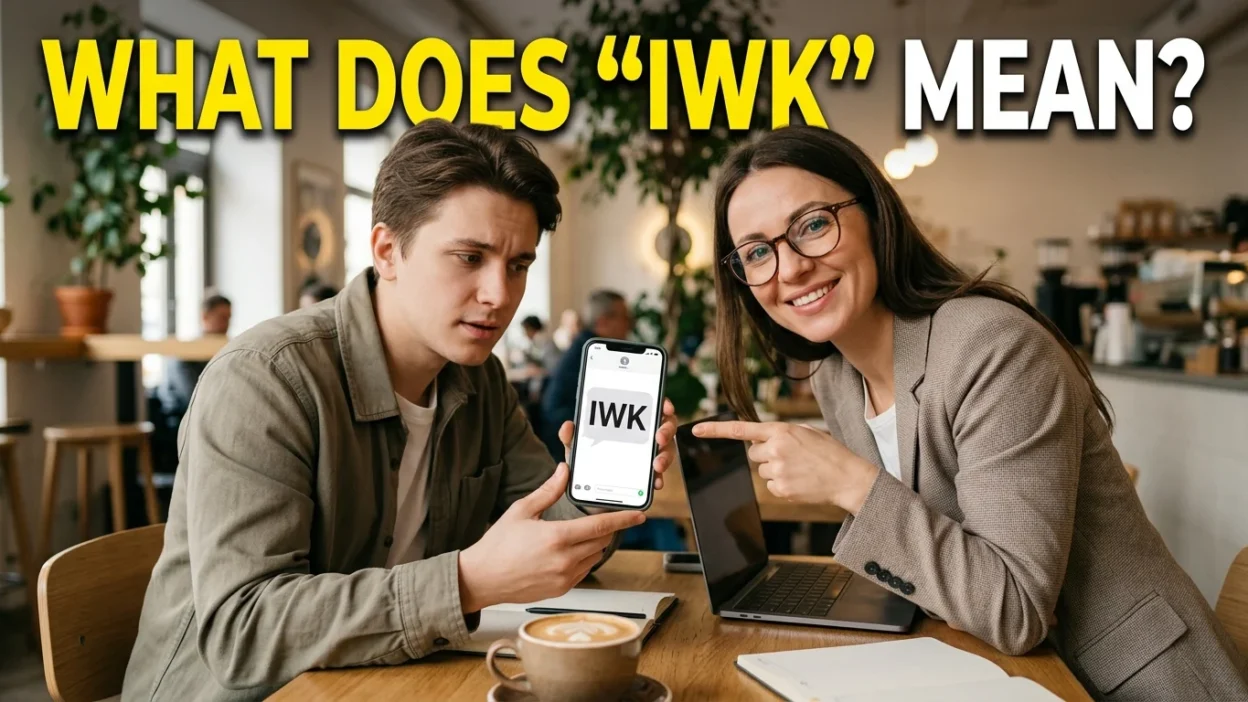
If someone sent you “iwk” as a reply and you had no idea what it meant, you’re not alone. It’s not as common as abbreviations like “lol” or “idk,” so it can easily leave people confused the first time they see it.
People search for “iwk meaning in text” because it’s a lesser-known abbreviation that still shows up regularly in casual conversations. It’s a quick way to respond to a question without giving a direct answer, and knowing what it means helps you understand the tone behind the reply. Once you learn it, you’ll notice it fits naturally into everyday texting.
You’ll come across “iwk” in text messages, group chats, and casual online conversations, especially when someone is asked something they genuinely don’t know the answer to. In this article, you’ll learn exactly what “iwk” means, how it’s used in different situations, real examples, its origin, similar expressions, and common mistakes to avoid.
Quick Answer
“IWK” stands for “I wouldn’t know.” It’s a casual way of saying you don’t have the answer to something, often used when someone asks you a question that isn’t really your place to answer.
What Does “IWK” Mean?
“IWK” is short for “I wouldn’t know.” It’s used to respond to a question when the person genuinely doesn’t have the information or doesn’t feel qualified to answer.
In plain English, saying “iwk” is like saying: “That’s not something I would know about.” It’s a bit different from simply saying “I don’t know,” since it can also imply that the question wasn’t really meant for you in the first place.
The literal meaning breaks down naturally. “I wouldn’t” suggests it’s not something within your knowledge or role, and “know” confirms the lack of information. Together, it forms a casual, quick reply.
The most common meaning across texting is a polite or neutral way to decline giving an answer, often used when someone is asked about another person’s business, decisions, or feelings.
Meaning in Different Contexts
The core meaning of “iwk” stays fairly consistent, but the tone can shift slightly depending on the situation.
Everyday Conversation
In spoken conversation, people often say “I wouldn’t know” the same way, especially when asked something outside their knowledge or involvement, like someone else’s plans or opinions.
Text Messages
In texting, “iwk” is a quick, casual way to reply to a question without giving a real answer, especially when the topic isn’t something the sender has information about.
Social Media
On social media comments, “iwk” sometimes appears as a reply when someone is asked to weigh in on a topic they’d rather stay out of, like drama between other people.
Group Chats
In group chats, “iwk” is commonly used when someone is asked about another person’s actions or decisions, signaling that it’s not their place to answer.
Gaming
In gaming chats, “iwk” might show up when a player is asked about a teammate’s strategy or decision, especially when they genuinely have no insight into it.
Internet Slang
As part of internet slang, “iwk” fits into a family of quick response abbreviations, similar to “idk” (I don’t know), though with a slightly different tone that suggests distance from the topic.
Examples of “IWK”
Here are real-life examples showing how “iwk” is used in everyday texting.
1. Sentence: “Why did she leave the group chat?” Reply: “iwk, that’s between her and them.” Meaning: Declining to speculate about someone else’s situation. Situation: Group chat conversation about another person’s actions.
2. Sentence: “Is he coming to the party tonight?” Reply: “iwk, you’d have to ask him.” Meaning: Redirecting the question since it’s not the replier’s information to share. Situation: Friends planning an event.
3. Sentence: “Do you think they’re still together?” Reply: “iwk, not my business tbh.” Meaning: Avoiding gossip or speculation about someone else’s relationship. Situation: Casual chat between friends.
4. Sentence: “Why did the teacher cancel class?” Reply: “iwk, I just got here too.” Meaning: Genuinely lacking information about the situation. Situation: Students texting each other before class.
5. Sentence: “What’s her problem lately?” Reply: “iwk, ask her yourself.” Meaning: Declining to answer on someone else’s behalf. Situation: Friend group conversation.
When Do People Use “IWK”?
People use “iwk” when they’re asked something they either don’t know or don’t feel it’s their place to answer.
Common situations include being asked about someone else’s decisions, plans, feelings, or personal business.
Who uses it: It’s common among teens and young adults in casual texting, though anyone can use it when they want to stay neutral in a conversation.
Why people use it: It’s a quick way to avoid speculating, gossiping, or giving an answer that isn’t really theirs to give.
Appropriate situations include casual texts, group chats, and informal conversations. Inappropriate situations include formal communication, professional emails, or serious conversations where a clear, direct answer is expected.
Origin of “IWK”
“IWK” developed as part of the larger trend of shortening common phrases for faster texting, similar to abbreviations like “idk” (I don’t know) and “idc” (I don’t care). As texting became a primary form of communication in the 2000s, phrases used often in casual speech naturally got compressed into quick abbreviations.
The phrase “I wouldn’t know” itself has long been used in spoken English as a polite or neutral way to sidestep a question, especially when the topic involves someone else’s business. Shortening it to “iwk” fit naturally into texting culture as digital conversations grew faster and more casual.
There’s no single confirmed origin point for “iwk.” Like most texting slang, it developed gradually through everyday use rather than being introduced by one specific person or platform.
Similar Words and Alternatives
There are a few other expressions similar to “iwk” that convey a similar meaning.
- “Idk” – “I don’t know,” a more general lack of information.
- “Nya” – “Not your (or my) affair,” used to decline commenting on something.
- “Not my place” – A fuller phrase expressing the same idea as “iwk.”
- “Ask them” – A direct way to redirect the question.
- “No clue” – A casual way to say you genuinely don’t know something.
The main difference is that “iwk” often implies the question wasn’t really meant for you, while “idk” is more general and doesn’t carry that same distancing tone.
Common Mistakes
One common mistake is confusing “iwk” with “idk.” While they’re similar, “iwk” often carries the extra meaning of “that’s not my place to answer,” whereas “idk” is a simple statement of not knowing something.
Another mistake is using “iwk” in serious or formal situations where a clearer answer is expected, which can come across as dismissive or evasive.
Correct usage: “iwk, ask him yourself” in a casual group chat. Incorrect usage: Using “iwk” in a professional email when a direct answer is needed.
Tip to avoid confusion: If you genuinely don’t know something and it’s not about avoiding a topic, “idk” might fit better. Use “iwk” specifically when the question feels like it’s not yours to answer.
Frequently Asked Questions
What does “iwk” mean in a text message?
“IWK” stands for “I wouldn’t know.” It’s used to reply to a question the sender either doesn’t know the answer to or doesn’t feel it’s their place to answer.
Is “iwk” the same as “idk”?
They’re similar, but “iwk” often implies the question isn’t really the replier’s to answer, while “idk” is a more general lack of knowledge.
When should I use “iwk” instead of “idk”?
Use “iwk” when the question is about someone else’s business or decisions. Use “idk” for a general lack of information.
Can I use “iwk” in professional messages?
It’s best to avoid “iwk” in formal or professional communication, since it can come across as evasive or too casual.
Where did “iwk” come from?
It developed from the phrase “I wouldn’t know” through texting culture, following the same pattern as other shortened phrases like “idk” and “idc.”
Is “iwk” considered rude?
Not usually. It’s typically seen as a neutral, polite way to avoid speculating or gossiping about someone else’s situation.
How do I reply when someone says “iwk”?
You can accept their answer and move on, or redirect your question to the person who would actually know.
Conclusion
“IWK” is a casual texting abbreviation that means “I wouldn’t know.” It’s often used when someone is asked a question that isn’t really theirs to answer, especially when it involves another person’s decisions or business. You’ll mostly see it in text messages and group chats among friends.
While it works well in casual conversations, it’s best avoided in professional or formal settings where a direct answer is expected. Understanding the difference between “iwk” and similar phrases like “idk” helps you use it correctly and interpret it the right way when someone sends it to you. Paying attention to context always makes texting slang easier to understand.

Hi, I’m Ethan Carter, a writer at Meanhubz.com. I enjoy explaining words, phrases, slang, and everyday expressions in a simple and engaging way. My goal is to help readers understand language clearly, improve their English, and communicate with confidence through practical examples and easy-to-follow explanations.