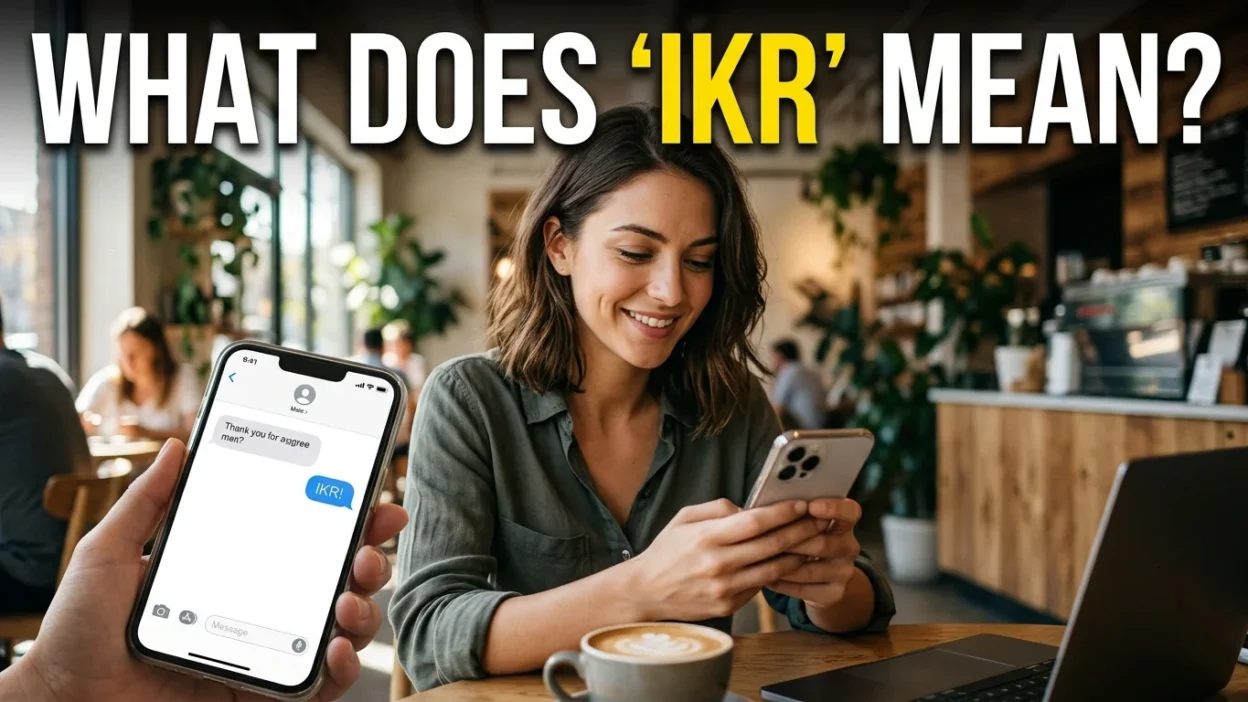
Online conversations are full of abbreviations that help people express their feelings and reactions quickly. One popular abbreviation you may see in text messages and social media comments is IKR, which stands for “I Know, Right?” People use it when they strongly agree with something another person has said or want to show that they share the same opinion.
For example, if your friend texts, “This movie is amazing!” you might reply, “IKR! I could watch it again.” In this situation, the abbreviation communicates excitement and agreement without requiring a long response. You may also see IKR used when people discuss funny moments, frustrating situations, celebrities, relationships, or everyday experiences.
It is common on platforms such as Snapchat, Instagram, TikTok, WhatsApp, and in casual group chats. Depending on the conversation, IKR can sound enthusiastic, playful, sarcastic, or simply friendly. Although it is widely understood in informal communication, it is generally better to write the full phrase in formal emails, academic assignments, or professional documents.
Quick Answer
“IKR” stands for “I Know, Right?” It’s a casual text abbreviation used to agree strongly with something someone just said. It shows you feel the exact same way, often with a bit of surprise, excitement, or emphasis.
What Does “IKR” Mean?
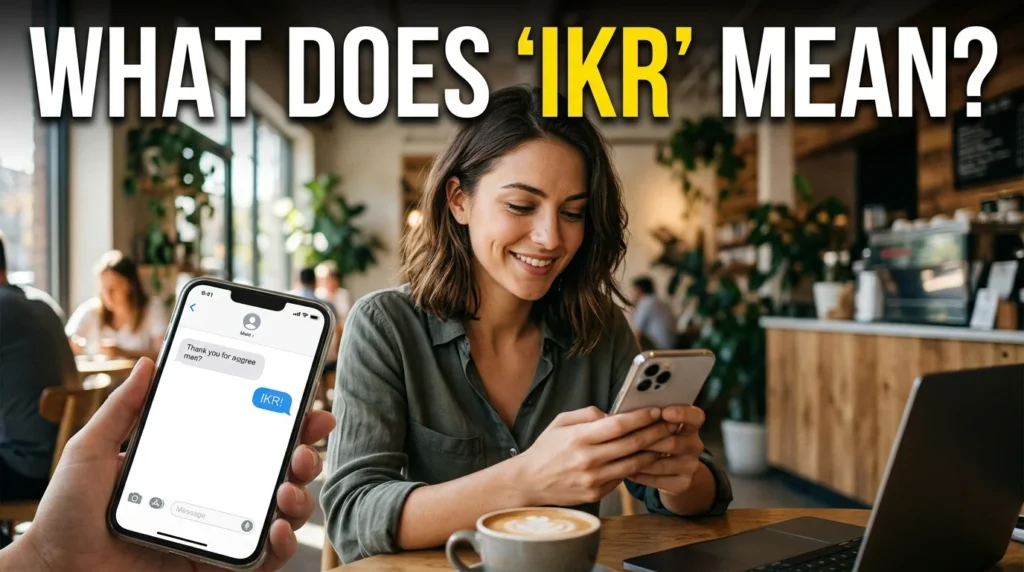
“IKR” is short for “I know, right?” It’s an abbreviation people use in texting and online chats to express strong agreement.
In plain English, saying “ikr” is like saying: “Yes, exactly! I was thinking the same thing.” It’s not just a plain “yes” it adds a little extra energy, almost like you’re backing someone up enthusiastically.
The literal meaning breaks down simply. “I know” means you already understand or agree with the point. Adding “right?” turns it into a rhetorical question, one that doesn’t actually need an answer because it’s really just confirming a shared feeling.
The most common meaning across almost every platform is agreement with emphasis. If a friend says, “This weather is nonsensical,” and you reply “ikr,” you’re confirming that you feel exactly the same way maybe even more strongly.
Meaning in Different Contexts
The core meaning of “ikr” stays pretty consistent, but how it’s used and what tone it carries can shift depending on the platform or situation.
Everyday Conversation
In spoken conversation, people often say the full phrase “I know, right?” out loud, especially among younger speakers and casual friend groups. It works the same way as the texted version showing strong agreement, often with a slight rise in tone to sound relatable and engaged.
Text Messages
In regular texting, “ikr” is one of the most common short replies. It’s quick, easy to type, and instantly signals agreement without needing a long response. It’s especially common in back-and-forth conversations where speed matters more than formality.
Social Media
On platforms like X (formerly Twitter) or Facebook, “ikr” often appears in comment replies. Someone posts an opinion or a relatable moment, and other users reply “ikr” to show they feel the same way, sometimes stacking multiple “ikr” comments under one popular post.
On WhatsApp, “ikr” is used almost exactly like in regular texting casual, quick, and friendly. It’s common in both one-on-one chats and group chats, especially when someone shares something relatable, funny, or frustrating.
Snapchat
On Snapchat, “ikr” often shows up in chat replies to Snaps or stories. Since Snapchat conversations tend to be fast and informal, “ikr” fits perfectly as a quick reaction before moving on to the next message.
On Instagram, especially in comments and DMs, “ikr” is a go-to reply when someone agrees with a caption, meme, or relatable post. It’s short, casual, and matches the fast scrolling nature of the platform.
TikTok
In TikTok comment sections, “ikr” frequently appears under viral or relatable videos. Viewers use it to show they connect with what’s being said in the video, almost like a text version of nodding along.
Gaming
In gaming chats, whether it’s voice-to-text or typed messages, “ikr” is used to agree with teammates. For example, if someone says a match was unfair or intense, others might reply “ikr” to back them up quickly during fast-paced gameplay.
Professional Communication
“IKR” is generally too casual for formal work emails or official documents. However, it can appear in relaxed workplace chats, like Slack or Teams messages between coworkers who have a friendly, informal relationship.
Internet Slang
As part of internet slang, “ikr” belongs to a bigger family of abbreviations built for speed and casual tone, similar to “lol,” “omg,” and “tbh.” It reflects how online communication favors short, expressive phrases over full sentences.
Examples of “IKR”
Here are real-life examples showing how “ikr” is used in different situations.
1. Sentence: “This show’s ending was so unexpected.” Reply: “ikr! I did not see that coming at all.” Meaning: Strong agreement with genuine surprise. Situation: Friends texting about a TV show.
2. Sentence: “Traffic today is actually ridiculous.” Reply: “ikr, it took me an hour to go five miles.” Meaning: Shared frustration and agreement. Situation: Commuters complaining to each other.
3. Sentence: “This cafe has the best coffee in town.” Reply: “ikr, I literally come here every day.” Meaning: Enthusiastic agreement based on personal experience. Situation: Friends chatting about a favorite spot.
4. Sentence: “Can you believe how fast this year went by?” Reply: “ikr, feels like January was just yesterday.” Meaning: Emotional agreement, often tied to nostalgia. Situation: Casual reflection between friends.
5. Sentence: “That test was way harder than expected.” Reply: “ikr, I thought I studied enough but nope.” Meaning: Agreement paired with shared disappointment. Situation: Students talking after an exam.
When Do People Use “IKR”?
People use “ikr” in situations where they want to quickly confirm they share the same opinion or feeling as someone else.
Common situations include casual texting, replying to relatable social media posts, chatting during or after watching a show together, and agreeing with a complaint or funny observation.
Who uses it: It’s especially common among teens and young adults, but people of all ages use it in casual digital conversations. It’s become a normal part of everyday texting vocabulary.
Why people use it: It’s fast, easy to type, and instantly communicates a strong reaction without needing a full sentence. It also helps conversations feel more natural and connected.
Appropriate situations include friendly texts, social media comments, and casual chats with people you know well. Inappropriate situations include formal emails, professional reports, academic writing, or first-time conversations with someone in a formal setting, since it can come across as too relaxed or unprofessional.
Different Meanings of “IKR”
While “ikr” almost always means agreement, the tone behind it can shift slightly depending on the situation.
1. Genuine Agreement Definition: A sincere confirmation that you feel exactly the same way. Context: Used when someone shares a real opinion or experience. Example: “This movie made me cry.” → “ikr, I was not ready for that ending.”
2. Sarcastic Agreement Definition: Agreement used with a sarcastic or exaggerated tone, often to poke fun at something obvious. Context: Used when the original statement is meant humorously or ironically. Example: “Wow, Mondays are just amazing.” → “ikr, best day ever.”
3. Filler Response Definition: A quick, low-effort reply used to keep a conversation going without much thought. Context: Often used in fast-paced chats when someone wants to respond but isn’t fully engaged. Example: “This song is stuck in my head.” → “ikr.”
Origin of “IKR”
“IKR” is part of a wave of texting abbreviations that grew popular alongside the rise of SMS messaging and early internet chatrooms in the late 1990s and 2000s. As texting became more common, people looked for ways to type faster, and shortening common phrases became second nature.
The phrase “I know, right?” itself has roots in casual spoken English, used for years before texting existed, as a way to emphasize agreement in conversation. Once texting culture took off, shortening it to “ikr” was a natural next step.
Its popularity grew further with instant messaging platforms like AIM and MSN Messenger, then exploded again with the rise of smartphones, texting apps, and social media platforms where fast, casual replies became the norm.
There’s no single confirmed inventor or exact first-use date for “ikr,” since it developed gradually through shared online and texting culture rather than being coined by one specific person or platform.
Similar Words and Alternatives
There are several expressions similar to “ikr” that convey the same general idea of agreement, though each has slightly different vibes.
- “Exactly” – A more formal way to express full agreement.
- “Totally” – Casual agreement, often used to sound enthusiastic.
- “Same” – A short, simple way to say you feel the same way.
- “Facts” – Slang used to strongly agree, popular in casual and online speech.
- “No cap” – Slang meaning “no lie,” often paired with agreement to emphasize honesty.
- “Tell me about it” – Agreement with a sense of shared frustration or experience.
The main difference is tone and formality. “Exactly” feels more neutral and can be used in semi-formal settings, while “facts” and “no cap” are more slang-heavy and best kept to casual conversations.
Common Mistakes
One common mistake is using “ikr” in formal writing, like emails, reports, or professional messages, where it can come across as unprofessional or too casual.
Another mistake is misreading tone. Since text lacks facial expressions or vocal tone, “ikr” can sometimes be mistaken as sarcastic when it’s meant sincerely, or vice versa. Paying attention to the rest of the conversation helps clarify the intended tone.
Correct usage: “ikr, that ending was mistaken!” in a casual text with friends. Incorrect usage: Using “ikr” in a formal email to a manager or client.
Tip to avoid confusion: If you’re unsure how a message might come across, consider the relationship and setting. Casual chats are safe for “ikr,” but formal or unfamiliar conversations are not.
Frequently Asked Questions
What does “ikr” mean in a text message?
“IKR” means “I know, right?” It’s used to strongly agree with something someone else said.
Is “ikr” sarcastic or genuine?
It can be either, depending on context. Most of the time it’s genuine agreement, but it can be sarcastic when replying to an obvious or exaggerated statement.
Can I use “ikr” in professional messages?
It’s best to avoid “ikr” in formal or professional communication, since it’s considered casual internet slang.
Where did “ikr” come from?
It developed from the casual spoken phrase “I know, right?” and became popular through texting and instant messaging culture in the early 2000s.
Is “ikr” only used by teenagers?
No, while it’s especially popular among teens and young adults, people of many ages use it in casual digital conversations.
What’s the difference between “ikr” and “same”?
Both express agreement, but “ikr” often carries a bit more emphasis or surprise, while “same” is more neutral and simple.
How do I reply to “ikr”?
You can simply continue the conversation naturally, add more detail to your original point, or use another casual phrase like “totally” or “exactly” to keep the agreement going.
Conclusion
“IKR” is a simple but widely used texting abbreviation that means “I know, right?” It’s mainly used to express strong agreement, though its tone can shift from sincere to sarcastic depending on the conversation. You’ll spot it everywhere, from text messages and WhatsApp chats to Instagram comments, TikTok, and even casual gaming chats.
While it fits perfectly into casual conversations, it’s best avoided in formal writing or professional settings. Understanding both the meaning and the context behind “ikr” helps you use it naturally and interpret it correctly when others send it to you. As with most internet slang, paying attention to tone, platform, and relationship makes all the difference in getting the meaning right.

Hi, I’m William Brooks, a writer at Meanhubz.com. I’m passionate about making English words, phrases, idioms, and expressions easy to understand. I create clear, accurate, and engaging content with simple examples to help students, writers, and English learners improve their vocabulary and communicate with greater confidence in everyday life.