Have you ever received a message and wondered what Text Message SMS Meaning actually refers to? You are not alone. We use text messages every day to stay connected with friends, family, coworkers, and businesses, but many people still wonder what “SMS” means and how it is different from a regular text message.
You are checking your phone settings, reading a message notification, or simply trying to understand common texting terms, knowing the meaning of SMS can make things much clearer.
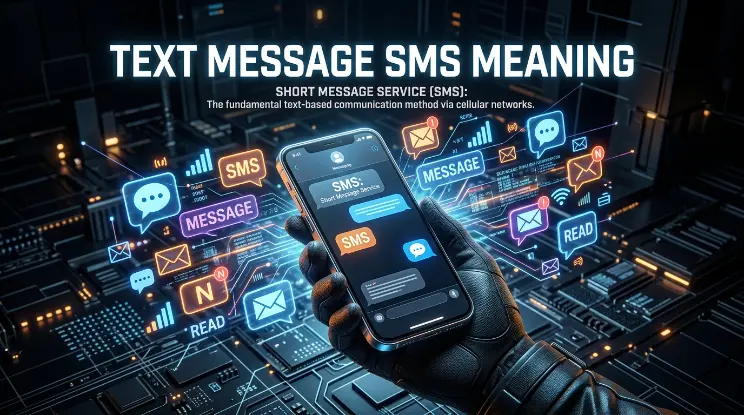
SMS stands for Short Message Service, a technology designed to send short text-based messages between mobile phones. It has been around for decades and remains one of the simplest and most widely recognized ways to communicate through a phone. Unlike internet-based messaging apps, traditional SMS usually works through a mobile network, making it useful even when you are not connected to Wi-Fi or mobile data.
Quick Answer
“SMS” stands for “Short Message Service,” the technology that allows short text messages to be sent between mobile phones. It’s the basic system behind traditional text messaging, limited to 160 characters per message and sent over a cellular network rather than the internet.
What Does “SMS” Mean?
“SMS” is short for “Short Message Service.” In plain English, it’s simply the technical name for a basic text message sent from one phone to another.
The literal meaning breaks down easily: “short” refers to the limited length of the message, and “message service” refers to the system that delivers it between phones.
The most common everyday use of the term happens without most people even noticing, every basic text message sent through your phone’s default messaging app is technically an SMS message.
Meaning in Different Contexts
While “SMS” always refers to the same core technology, the term shows up in slightly different ways depending on the situation.
Everyday Conversation
In everyday conversation, people rarely say “SMS” out loud. Instead, they simply say “text” or “text message,” even though it’s technically an SMS message being sent.
Text Messages
Within texting itself, “SMS” is the technical term for a standard message, as opposed to messages sent through internet-based apps like iMessage or WhatsApp.
Social Media
On social media, “SMS” often comes up in discussions about verification codes, since many platforms send login codes through SMS as a security step.
On WhatsApp, “SMS” is used to distinguish regular phone texting from WhatsApp messages, which use internet data instead of the traditional cellular messaging network.
Snapchat
On Snapchat, “SMS” isn’t part of the app itself, but it’s often mentioned when comparing Snapchat messages to regular phone texting.
On Instagram, “SMS” typically comes up in the context of two-factor authentication, where Instagram sends a verification code through SMS to confirm your identity.
TikTok
On TikTok, “SMS” is mostly mentioned in videos or comments explaining phone features, security codes, or differences between messaging apps.
Gaming
In gaming, “SMS” occasionally appears when games require phone verification for account security, sending a one-time code through SMS.
Professional Communication
In professional settings, “SMS” is commonly used when discussing business text alerts, appointment reminders, or two-factor authentication codes sent to employees or customers.
Internet Slang
Unlike casual slang abbreviations, “SMS” isn’t really internet slang. It’s an official technical term that has simply become part of everyday vocabulary.
Examples of “SMS”
Here are five real-life examples showing how “SMS” is used in different situations.
1. “Your verification code was sent via SMS.”
- Meaning: Short Message Service
- Situation: A security message confirming a login code was texted to your phone.
2. “I don’t have data right now, can you SMS me instead?”
- Meaning: Short Message Service
- Situation: Asking someone to send a regular text instead of an internet-based message.
3. “SMS charges may apply depending on your plan.”
- Meaning: Short Message Service
- Situation: A notice about potential fees for sending standard text messages.
4. “This app supports both SMS and internet messaging.”
- Meaning: Short Message Service
- Situation: Describing a messaging app’s features.
5. “Appointment reminder sent via SMS.”
- Meaning: Short Message Service
- Situation: A business confirming a reminder was texted to a customer.
When Do People Use “SMS”
People and businesses use “SMS” whenever they need a reliable, simple way to send short text-based messages, without depending on internet access. It’s used across nearly every age group and industry.
Common situations include:
- Receiving verification codes for account security.
- Getting appointment or delivery reminders from businesses.
- Sending basic texts when internet data isn’t available.
- Communicating in areas with weak or no internet connection.
It’s appropriate to use SMS in almost any setting, personal or professional, since it works on virtually every mobile phone without needing an app or internet connection. It’s especially useful in situations where reliability matters most, like security codes or emergency alerts.
Different Meanings of “SMS”
While “SMS” mainly refers to one core technology, it can apply to a few slightly different contexts.
1. Short Message Service (Standard Texting)
- Definition: The basic technology used to send short text messages between phones.
- Context: Everyday texting, especially without internet-based apps.
- Example: “I’ll just SMS you the address.”
2. SMS Verification (Security Codes)
- Definition: A method of confirming identity by sending a one-time code through text message.
- Context: Logging into apps, banking, or online accounts.
- Example: “Enter the code sent to your phone via SMS.”
3. SMS Marketing (Business Alerts)
- Definition: A method businesses use to send promotions, reminders, or updates directly to customers’ phones.
- Context: Retail, appointment scheduling, delivery notifications.
- Example: “Sign up for SMS alerts to get exclusive deals.”
Origin of “SMS”
SMS technology was developed in the 1980s as part of the GSM (Global System for Mobile Communications) standard, designed to let mobile phones send short text-based messages over cellular networks.
The very first SMS text message was sent in December 1992, a simple “Merry Christmas” message sent from a computer to a mobile phone in the UK. At the time, no one expected texting to become as massive as it did.
Throughout the 1990s and 2000s, SMS became the dominant way people communicated on mobile phones, especially before internet-based messaging apps like WhatsApp and iMessage became widely available.
Even though newer messaging apps now dominate daily communication for many people, SMS remains essential today, especially for security verification, emergency alerts, and communication in areas with limited internet access.
Similar Words and Alternatives
If you’re looking for related terms, here are a few similar expressions:
- MMS – “Multimedia Messaging Service,” used for sending photos, videos, or longer messages, unlike basic text-only SMS.
- iMessage – Apple’s internet-based messaging service, which works only between Apple devices using Wi-Fi or data.
- RCS – “Rich Communication Services,” a newer messaging standard offering more features than SMS, like read receipts and higher-quality media sharing.
- Text Message – The common, everyday term people use instead of saying “SMS.”
- DM – “Direct message,” referring to private messages sent through social media apps rather than phone networks.
The main difference is technology and features. SMS is text-only and works over cellular networks, while MMS adds media support, and apps like iMessage or WhatsApp rely on internet data instead of traditional texting networks.
Common Mistakes
One common mistake is assuming all text messages are automatically SMS messages, even when sent through internet-based apps like WhatsApp or iMessage, which actually use completely different technology.
Another mistake is confusing SMS with MMS, especially when sending photos or videos, since those messages technically switch from SMS to MMS due to the added media.
Tip to avoid confusion: If a message is plain text sent over your phone’s cellular network without an app like WhatsApp, it’s SMS. If it includes photos or videos, it’s likely MMS instead.
Frequently Asked Questions
What does “SMS” stand for?
“SMS” stands for “Short Message Service,” the technology used to send short text messages between mobile phones.
Is a text message the same as SMS?
Yes, in most cases. A basic text message sent without an internet-based app is technically an SMS message.
What’s the difference between SMS and MMS?
SMS is limited to plain text, while MMS allows photos, videos, and longer messages to be sent between phones.
Why do apps send verification codes through SMS?
SMS is widely used for verification because it works on almost every phone and doesn’t require an internet connection, making it a reliable security method.
Does SMS cost money to send?
It depends on your mobile plan. Many plans include unlimited SMS, though some carriers may charge fees depending on your service.
Is SMS still used today with apps like WhatsApp available?
Yes, SMS remains essential for security codes, emergency alerts, and communication in areas with limited internet access.
When was the first SMS message sent?
The first SMS text message was sent in December 1992, a simple “Merry Christmas” greeting sent from a computer to a mobile phone.
Conclusion
“SMS” stands for “Short Message Service,” the basic technology behind traditional text messaging that lets short messages travel between mobile phones over a cellular network. It’s the simple, reliable system working quietly behind nearly every text you send and receive.
You’ll encounter SMS most often through verification codes, appointment reminders, and everyday texting, especially in situations without internet access. Even with newer messaging apps available, SMS remains a dependable backbone of mobile communication worldwide.

Hi, I’m Lucas Morgan, a writer at Meanhubz.com. I enjoy exploring words, phrases, idioms, and everyday expressions and explaining them in simple language. My goal is to create clear, engaging, and useful content that helps readers improve their English, understand meanings easily, and communicate with greater confidence every day.