
If you’ve gotten a text that starts with “jw” and wondered what it meant, you’re definitely not alone. It’s short, simple, and used constantly in casual texting, but it’s easy to overlook if you’ve never seen it before.
People search for “jw meaning in text” because it shows up in everyday conversations, and knowing what it means helps you understand the tone behind a question. It’s common in texting, DMs, and casual chats, especially when someone wants to ask something without sounding too serious or demanding. Understanding it helps you reply naturally and pick up on the softer, more casual vibe behind the message.
In this article, you’ll learn what “jw” means, how it’s used across different platforms, real examples of it in action, where it came from, and common mistakes people make with it. By the end, you’ll be able to spot it and use it with confidence.
Quick Answer
“JW” stands for “just wondering.” It’s a casual way to introduce a question, often used to soften the tone and make it clear the person isn’t being pushy or demanding an answer.
What Does “JW” Mean?
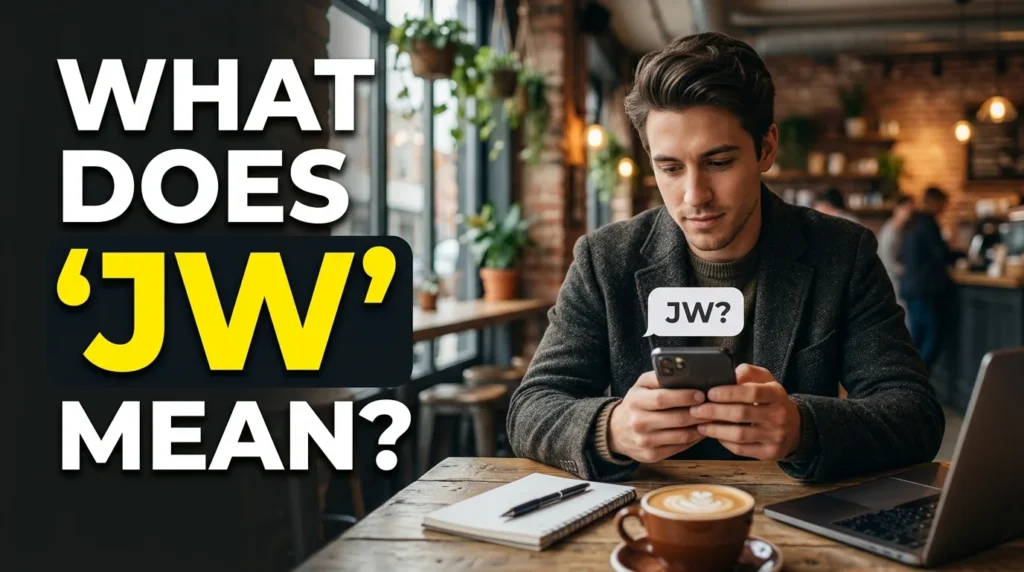
“JW” is short for “just wondering.” Each letter stands for one word in that phrase.
In plain English, when someone types “jw” before or after a question, they’re letting you know they’re simply curious, not trying to pressure you or start an argument. It softens the question and makes it feel more relaxed.
The literal meaning and the common meaning line up closely here. “JW” is almost always used exactly as it sounds, a casual, low-pressure way to ask something out of curiosity.
Meaning in Different Contexts
The core meaning of “jw” stays consistent across most platforms, though the tone can shift slightly depending on the conversation.
Everyday Conversation
In spoken conversation, people usually say “just wondering” out loud rather than “jw.” The abbreviation itself is meant for typing, not talking.
Text Messages
In texting, “jw” often appears at the start or end of a question, like “jw, are you coming tonight?” to keep the tone casual and low-pressure.
Social Media
On platforms like Twitter/X, “jw” sometimes shows up in replies or comments when someone is asking a casual question out of curiosity rather than concern.
In WhatsApp chats, “jw” is used the same way as regular texting, typically softening a question so it doesn’t come across as too direct or urgent.
Snapchat
On Snapchat, “jw” fits naturally into quick chat messages, especially when someone wants to ask something casually without sounding too serious.
In Instagram DMs or comments, “jw” often appears when someone’s asking a friendly, curious question, like “jw, where’d you get that jacket?”
TikTok
In TikTok comments, “jw” sometimes shows up when someone’s asking a creator a casual question, keeping the tone light and non-demanding.
Gaming
In gaming chats, “jw” can appear when a player asks something out of curiosity, like asking about strategy or plans, without sounding like they’re criticizing.
Professional Communication
“JW” is generally too casual for professional communication. In workplace messages, spelling out “just wondering” or “quick question” sounds more appropriate.
Internet Slang
Within internet slang, “jw” belongs to a group of tone-softening abbreviations, alongside terms like “no worries” and “just curious,” all used to keep questions feeling relaxed.
Examples of “JW”
Here are real-life examples of how “jw” gets used in everyday digital conversations.
1. Sentence: “jw, did you end up finishing the project?” Meaning: Asking a casual question without sounding demanding. Situation: A text sent to a classmate or coworker.
2. Sentence: “are you free this weekend? jw.” Meaning: Softening a question about someone’s availability. Situation: A friend checking in about weekend plans.
3. Sentence: “jw who else is coming to the party tonight.” Meaning: Asking out of curiosity, not pressure. Situation: A message in a group chat before an event.
4. Sentence: “jw, how’d your appointment go?” Meaning: Checking in casually on something important to the other person. Situation: A caring but low-pressure follow-up text.
5. Sentence: “no worries either way, jw what you thought of the movie.” Meaning: Asking for an opinion without expecting an immediate or detailed answer. Situation: A relaxed text between friends after watching something together.
When Do People Use “JW”
People use “jw” whenever they want to ask a question casually, without making it feel urgent, demanding, or confrontational.
It’s common across many age groups, especially among texters who want to keep conversations light and low-pressure. Friends, coworkers in casual chats, and social media users all use it fairly regularly.
People use it because it softens the tone of a question, reducing the chance of the message feeling too direct or intense. It works especially well in text, where tone can easily be misread without extra context.
It’s appropriate in texts, casual chats, and friendly conversations. It’s less appropriate in serious or emotional discussions, where using “jw” might come across as dismissive of the topic’s importance.
Different Meanings of “JW”
While “just wondering” is by far the most common meaning, “jw” does have one other well-known use worth mentioning.
1. Just Wondering (Most Common Meaning)
- Definition: A casual way to introduce or soften a question.
- Context: Texting, social media, everyday conversation.
- Example: “jw if you got my last message.”
2. Jehovah’s Witness (Religious Context)
- Definition: An abbreviation referring to a member of the Jehovah’s Witnesses religious group.
- Context: Religious or community discussions.
- Example: “she grew up in a JW household.”
These two meanings are easy to tell apart based on context. Casual questions almost always point to “just wondering,” while conversations about religion or beliefs point to “Jehovah’s Witness.”
Origin of “JW”
“JW” as “just wondering” developed out of the same texting culture that shortened many other common phrases to save time and characters, following the same pattern as abbreviations like “btw” and “fyi.”
It became especially popular in the early days of SMS texting, when character limits encouraged people to shorten phrases wherever possible. As texting evolved into instant messaging and social media, “jw” carried over naturally, since the need to soften casual questions never really went away.
Its continued popularity comes from how useful it is socially. Adding “jw” to a question can reduce the chance of it sounding blunt, defensive, or demanding, which matters a lot in text-based conversations where tone is easy to misread.
There’s no single inventor credited with creating “jw.” Like most texting abbreviations, it developed gradually through everyday use rather than being introduced by one specific source.
Similar Words and Alternatives
If you’ve seen “jw,” you’ve probably also come across similar phrases used to soften a question.
- Just curious – A slightly longer, non-abbreviated way to express the same casual tone.
- No pressure, but – A phrase that softens a question in a similar way, often used before asking something sensitive.
- Random question, but – Another casual lead-in used to soften an unexpected or unrelated question.
- Out of curiosity – A more formal alternative that carries the same meaning.
- Just checking – Similar in tone, often used specifically to confirm information rather than ask something new.
The main difference between these options is length and formality. “JW” is the shortest and most casual, while phrases like “out of curiosity” fit slightly more polished conversations.
Common Mistakes
One common mistake is using “jw” in serious or emotional conversations, where it can come across as dismissive of how important the topic is to the other person.
Another mistake is confusing “jw” with “Jehovah’s Witness” outside of religious context, which can lead to confusion if the abbreviation appears unexpectedly in an unrelated conversation.
Some people also overuse “jw” in every question they ask, which can start to feel repetitive or unnecessary if it’s added to messages that don’t really need softening.
Tip to avoid confusion: Save “jw” for genuinely casual, low-stakes questions. For serious topics, spelling out the full question without the abbreviation usually feels more appropriate and thoughtful.
Frequently Asked Questions
What does “jw” mean in a text message?
“JW” stands for “just wondering,” a casual way to ask a question without sounding demanding or urgent.
Is “jw” the same as “Jehovah’s Witness”?
Not usually. In casual texting, “jw” almost always means “just wondering.” “Jehovah’s Witness” only applies in religious or community-related conversations.
Is “jw” appropriate for serious conversations?
Not really. It’s best used for casual, low-pressure questions, since it can come across as dismissive in more serious or emotional discussions.
Can I use “jw” in professional messages?
It’s better to avoid it in formal or professional communication. Spelling out “just wondering” or “quick question” is more appropriate in that setting.
Where did “jw” come from?
It developed from early SMS texting culture, where abbreviations became popular due to character limits, similar to terms like “btw” and “fyi.”
Does “jw” sound rude?
No, it’s actually meant to do the opposite. Adding “jw” to a question is meant to soften the tone and reduce any pressure behind it.
Who uses “jw” the most?
“JW” is used across many age groups, though it’s especially common among casual texters looking to keep conversations light and relaxed.
Conclusion
So, what does “jw” mean in text? It stands for “just wondering,” a simple, casual way to ask a question while keeping the tone light and low-pressure. It’s meant to soften a message, not add urgency.
While “jw” can occasionally refer to “Jehovah’s Witness” in religious contexts, its meaning in everyday texting is almost always the same: someone’s simply curious, nothing more.

Hi, I’m Ethan Carter, a writer at Meanhubz.com. I enjoy explaining words, phrases, slang, and everyday expressions in a simple and engaging way. My goal is to help readers understand language clearly, improve their English, and communicate with confidence through practical examples and easy-to-follow explanations.