If you’ve seen someone text “hmu later” or comment “hmu” under a post, you’ve probably paused for a second to figure out what it means. It’s one of those abbreviations that looks confusing at first but turns out to be pretty simple once you know it.
People search for “hmu meaning in text” because it shows up everywhere, in texts, DMs, comment sections, and casual conversations, and guessing wrong can lead to an awkward reply. It’s especially common among younger texters and social media users. Understanding it helps you respond the right way and avoid any confusion about what someone’s actually asking for.
In this article, you’ll learn what “hmu” means, how it’s used across different platforms, real examples of it in action, where it came from, and common mistakes people make with it. By the end, you’ll never have to second-guess it again.
Quick Answer
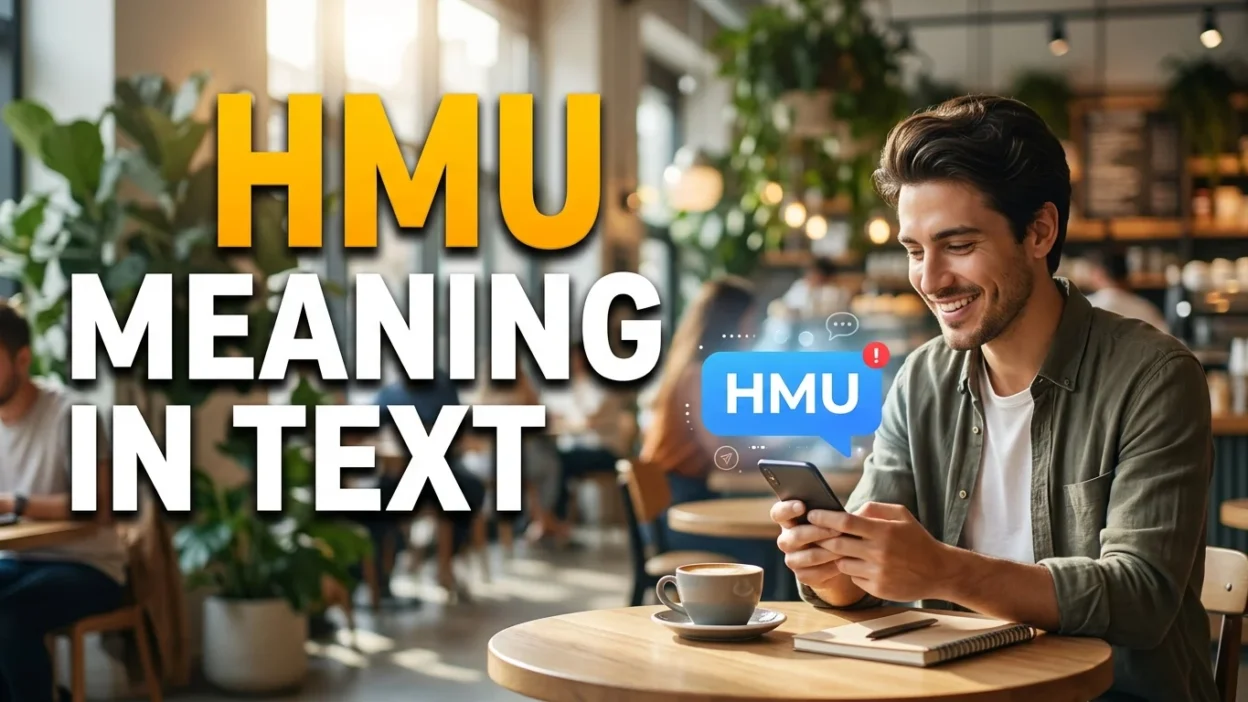
“HMU” stands for “hit me up.” It’s a casual way of asking someone to contact, message, or reach out to you, often used to make plans or stay in touch.
What Does “HMU” Mean?
“HMU” is short for “hit me up.” Each letter stands for one word in that phrase.
In plain English, when someone types “hmu,” they’re asking you to reach out to them, whether that’s through a text, a call, a DM, or just messaging them again later. It’s an invitation to get in touch.
The literal phrase “hit me up” doesn’t mean anything physical. It simply means “contact me.” This is also the most common meaning you’ll see, since “hmu” is almost always used this way in casual conversation.
Meaning in Different Contexts
The core meaning of “hmu” stays the same across platforms, but the reason people use it can shift depending on where you see it.
Everyday Conversation
In spoken conversation, people are more likely to say “hit me up” out loud instead of “hmu.” The abbreviation itself is meant for typing, not talking.
Text Messages
In texting, “hmu” is a common way to end a conversation while leaving the door open for future contact, like “hmu when you’re free” or “hmu if you need anything.”
Social Media
On platforms like Twitter/X, “hmu” often shows up when someone is looking for recommendations, help, or just wants people to reach out, such as “hmu if you know a good place to eat.”
In WhatsApp chats, “hmu” is used the same way as regular texting, usually to invite someone to message back or make plans for later.
Snapchat
On Snapchat, “hmu” is extremely common, often used to invite someone to snap or chat, especially among friends trying to plan something spontaneous.
In Instagram captions and comments, “hmu” often appears when someone is opening themselves up for messages, like offering services, selling something, or just wanting people to reach out.
TikTok
In TikTok comments, “hmu” sometimes shows up when a creator invites viewers to message them, collaborate, or reach out about something mentioned in the video.
Gaming
In gaming chats, “hmu” is used to invite teammates or friends to reach out later, whether that’s to team up for another match or just to stay in touch outside the game.
Professional Communication
“HMU” is too casual for professional communication. In workplace settings, phrases like “reach out” or “let me know” are the appropriate alternatives.
Internet Slang
Within internet slang, “hmu” belongs to a group of casual invitation phrases, alongside similar ones like “lmk” (let me know) and “dm me.”
Examples of “HMU”
Here are real-life examples of how “hmu” gets used in everyday digital conversations.
1. Sentence: “hmu if you’re down to hang out this weekend.” Meaning: Inviting a friend to reach out and make plans. Situation: A text sent to a friend about weekend plans.
2. Sentence: “selling my old bike, hmu if interested.” Meaning: Asking potential buyers to message about a sale. Situation: A social media post offering something for sale.
3. Sentence: “hmu when you land, I’ll come pick you up.” Meaning: Asking someone to contact you once they arrive somewhere. Situation: A text before someone’s flight or trip.
4. Sentence: “if anyone needs notes from class, hmu.” Meaning: Offering help and inviting people to reach out. Situation: A message in a class group chat.
5. Sentence: “feeling bored, hmu if you wanna do something.” Meaning: Inviting friends to reach out for company or plans. Situation: A casual text sent to a friend group.
When Do People Use “HMU”
People use “hmu” whenever they want to leave an open invitation for someone to contact them, whether that’s for plans, help, questions, or just casual conversation.
It’s common among teens and young adults, especially in texting, group chats, and social media, though it’s understood pretty widely across different age groups too. Friends, classmates, and even small business owners on social media use it to invite messages.
People use it because it’s short, casual, and gets straight to the point. Typing “hmu” is much quicker than writing “please contact me whenever you get a chance.”
It’s appropriate in texts, casual chats, and informal social media posts. It’s less appropriate in professional emails, job applications, or any formal writing where clear, polished language matters more than speed.
Different Meanings of “HMU”
“HMU” is a fairly straightforward abbreviation, but it’s worth understanding the slight variations in how it’s used.
1. Hit Me Up (Standard Meaning)
- Definition: A casual invitation to contact someone.
- Context: Texting, social media, casual conversation.
- Example: “hmu whenever you’re free.”
2. HMU as a Call-to-Action
- Definition: Used in posts or captions to invite people to reach out about something specific, like a sale, service, or opportunity.
- Context: Social media captions, marketplace posts, promotional content.
- Example: “taking custom orders, hmu for details.”
Both uses point back to the same core idea: reach out and get in touch. The difference is just whether it’s a personal invitation between friends or a broader call-to-action aimed at a wider audience.
Origin of “HMU”
“HMU” developed out of texting and early internet chat culture, where shortening common phrases became a normal way to save time and characters. It follows the same pattern as abbreviations like “lmk” and “brb.”
The phrase “hit me up” itself has roots in casual American slang used well before texting became common, originally meaning to reach out or get in contact with someone. As texting grew in popularity, the phrase naturally got shortened into “hmu” to fit the fast-paced nature of typed conversations.
It carried over into social media as platforms like Twitter/X, Instagram, and Snapchat became major spaces for casual communication, where “hmu” fit right in as a quick, friendly way to invite messages.
There’s no single inventor or exact date tied to “hmu.” Like most texting abbreviations, it developed gradually through everyday use rather than being created by one specific source.
Similar Words and Alternatives
If you’ve seen “hmu,” you’ve probably also come across similar phrases used to invite contact.
- Lmk – Short for “let me know.” Often used interchangeably with “hmu,” though slightly more focused on getting a decision or answer.
- DM me – A direct request to send a private message, common on social media.
- Text me – A straightforward, non-slang alternative that means the same thing.
- Reach out – A more neutral, slightly more formal way to say the same thing.
- Holla – An older, more playful slang term with a similar meaning, though less common today.
The main difference between these options is tone and platform. “Hmu” and “holla” feel more casual, “DM me” is platform-specific, and “reach out” works better in slightly more formal situations.
Common Mistakes
One common mistake is using “hmu” in professional or formal writing, like emails, cover letters, or messages to a teacher or boss. In those situations, spelling out “please contact me” sounds far more appropriate.
Another mistake is assuming “hmu” always implies romantic interest. While it can be used that way in certain contexts, it’s just as often used platonically between friends, classmates, or even businesses.
Some people also forget that “hmu” is an invitation, not a guarantee. Saying “hmu” doesn’t mean someone will definitely reach out, it just leaves the door open.
Tip to avoid confusion: Pay attention to the context around “hmu.” A message like “hmu if you need help” is clearly platonic, while “hmu later 😏” leans more flirty depending on the relationship between the people texting.
Frequently Asked Questions
What does “hmu” mean in a text message?
“HMU” stands for “hit me up,” a casual way of asking someone to contact or message you.
Does “hmu” always mean something romantic?
No. “HMU” is often used platonically between friends, classmates, or even businesses, though it can carry a flirty tone depending on context.
Is “hmu” appropriate for professional messages?
No. It’s too casual for professional communication. Phrases like “reach out” or “let me know” work better in formal settings.
What’s the difference between “hmu” and “lmk”?
“HMU” is a general invitation to get in touch, while “lmk” specifically asks for a decision, answer, or update.
Who uses “hmu” the most?
Teens and young adults use “hmu” the most, especially in texting, group chats, and social media captions.
Where did “hmu” come from?
It comes from the older phrase “hit me up,” which was shortened into an abbreviation as texting and social media culture grew.
Can businesses use “hmu” in posts?
Yes. Many small businesses and creators use “hmu” in casual social media captions to invite messages about services, sales, or collaborations.
Conclusion
So, what does “hmu” mean in text? It stands for “hit me up,” a casual invitation for someone to reach out, message, or get in contact with you. It’s simple, friendly, and used constantly across texting and social media.
While the core meaning stays the same, the tone can shift depending on who’s saying it and why, ranging from purely platonic plans to a slightly flirtier invitation. Context is always the key to reading it correctly.

Hi, I’m Ethan Carter, a writer at Meanhubz.com. I enjoy explaining words, phrases, slang, and everyday expressions in a simple and engaging way. My goal is to help readers understand language clearly, improve their English, and communicate with confidence through practical examples and easy-to-follow explanations.