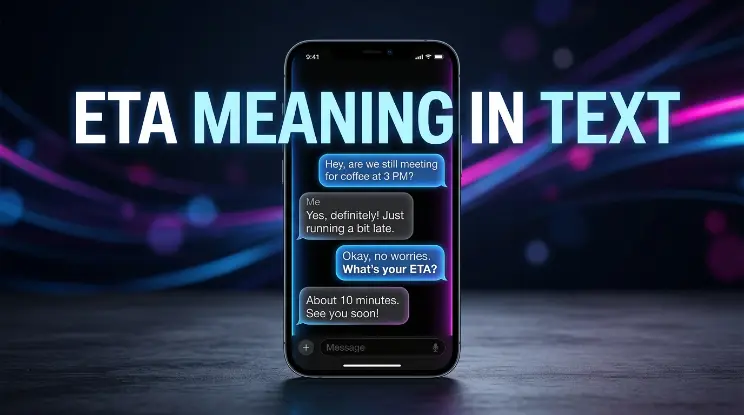
If a friend just texted “eta 10 mins” and you’re not totally sure what that means, you’re definitely not the only one. This short abbreviation shows up all the time in texts, delivery updates, and group chats, and it’s actually one of the easiest slang terms to understand once it clicks.
People search for “eta meaning in text” because it appears in so many everyday situations, from friends running late to online orders on the way. It’s used in casual texting, work chats, delivery apps, and even navigation apps. Knowing exactly what it means helps you reply quickly and understand what someone is really telling you.
In this guide, you’ll learn the full meaning of “eta,” how it’s used across different platforms and situations, real examples from daily conversations, where the term came from, and common mistakes people make with it. By the end, you’ll never have to guess what “eta” means again.
Quick Answer
“ETA” stands for “estimated time of arrival,” used to tell someone roughly when a person, delivery, or event will arrive. It’s commonly used in texting, navigation apps, delivery tracking, and everyday conversations about timing.
What Does “ETA” Mean?
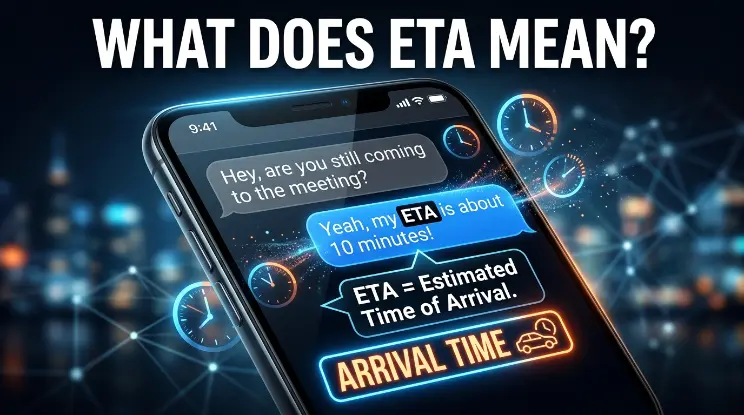
“ETA” is short for “estimated time of arrival.” In plain English, it simply tells you when someone or something is expected to show up.
The literal meaning breaks down easily: “estimated” means it’s a guess based on current information, and “time of arrival” means the moment something reaches its destination.
The most common everyday use looks like this: “what’s your eta?” or “eta 20 minutes.” It’s a quick, practical way to share timing without typing a full sentence.
Meaning in Different Contexts
While “eta” almost always means the same thing, how it’s used can shift slightly depending on the situation.
Everyday Conversation
In everyday talk, “eta” is used to ask or share when someone will arrive somewhere, like meeting up with friends or coming home.
Text Messages
In texting, “eta” is one of the most practical abbreviations out there. A quick “eta 5” tells someone you’ll arrive in five minutes without needing extra words.
Social Media
On social media, “eta” is used less for arrival times and more casually, sometimes referring to when a product, video, or announcement is expected to drop.
On WhatsApp, “eta” works exactly like in regular texting, especially in group chats where friends are coordinating meetups or travel plans.
Snapchat
On Snapchat, “eta” often shows up in quick chats when friends are heading to the same place and want a quick timing update.
On Instagram, “eta” sometimes appears in comments asking when a creator’s next post, product, or collaboration will be released.
TikTok
On TikTok, “eta” often shows up in comments asking about release dates for merchandise, videos, or upcoming content from creators.
Gaming
In gaming chats, “eta” can be used to ask when a teammate will be ready or when a match, event, or update is expected to happen.
Professional Communication
In work emails and business chats, “eta” is extremely common and useful, often used to ask about project timelines, deliveries, or meeting arrival times.
Internet Slang
As internet slang, “eta” has stayed practical and widely understood across almost every platform, unlike more playful abbreviations that shift meaning by context.
Examples of “ETA”
Here are five real-life examples showing how “eta” is used in different situations.
1. “What’s your eta? We’re already at the restaurant.”
- Meaning: Estimated time of arrival
- Situation: Asking a friend how long until they arrive.
2. “ETA on the package is tomorrow by 6pm.”
- Meaning: Estimated time of arrival
- Situation: A delivery app update about a package.
3. “eta 15 mins, traffic is bad rn”
- Meaning: Estimated time of arrival
- Situation: Letting someone know you’re running a little late.
4. “Any eta on when the project will be finished?”
- Meaning: Estimated time of arrival
- Situation: A workplace message asking about a deadline.
5. “eta on the new album drop?”
- Meaning: Estimated time of arrival
- Situation: A fan asking when new content will be released online.
When Do People Use “ETA”
People use “eta” whenever timing matters and they want a quick, clear way to share or ask about it. It’s used by people of all ages, from teens texting friends to professionals managing deadlines.
Common situations include:
- Letting someone know when you’ll arrive somewhere.
- Tracking deliveries or online orders.
- Asking about project timelines at work.
- Coordinating meetups or travel plans with friends.
It’s appropriate to use “eta” in almost any setting, casual or professional, since it’s widely understood and doesn’t come across as too informal. It works well in texts, emails, and even formal business communication.
Different Meanings of “ETA”
“ETA” mostly sticks to one core meaning, but it can apply to a few different situations depending on context.
1. Estimated Time of Arrival (Person)
- Definition: When a person is expected to arrive somewhere.
- Context: Meeting up with friends, family, or coworkers.
- Example: “eta 10 mins, leaving now.”
2. Estimated Time of Arrival (Delivery)
- Definition: When a package or order is expected to be delivered.
- Context: Online shopping, food delivery apps, shipping updates.
- Example: “Your order’s eta is Friday afternoon.”
3. Estimated Time of Availability (Content or Products)
- Definition: When something like a product, video, or announcement is expected to be released.
- Context: Social media comments, fan communities.
- Example: “eta on the restock?”
Origin of “ETA”
“ETA” started as a standard term long before texting existed, originally used in transportation industries like aviation, shipping, and logistics to estimate arrival times for flights, ships, and cargo.
As texting and messaging apps became popular, people naturally adopted “eta” into everyday conversation because it was already a well-known, practical abbreviation. It didn’t need reinventing, it simply moved from professional use into casual texting.
Today, “eta” is used the same way across formal and informal settings, making it one of the few abbreviations that never really changed meaning as it spread online.
Similar Words and Alternatives
If you’re looking for related terms, here are a few similar expressions:
- OMW – “On my way,” used to confirm you’ve already started heading somewhere.
- ASAP – “As soon as possible,” used to express urgency rather than a specific time.
- ETD – “Estimated time of departure,” referring to when someone leaves, not arrives.
- TBD – “To be determined,” used when a time or date hasn’t been decided yet.
- RN – “Right now,” used to indicate something happening immediately.
The main difference is timing focus. “ETA” tells you when something will arrive, while “OMW” confirms movement has already started, and “ETD” focuses on departure instead of arrival.
Common Mistakes
One common mistake is confusing “eta” with “etd.” While “eta” refers to arrival, “etd” refers to departure, and mixing them up can cause real scheduling confusion.
Another mistake is treating an “eta” as a guaranteed time rather than an estimate. Since it’s based on current conditions like traffic or shipping delays, the actual arrival time can still shift.
Tip to avoid confusion: Always read “eta” as a helpful estimate, not a fixed promise. If timing is critical, it’s best to ask for updates as the estimated time approaches.
Frequently Asked Questions
What does “eta” mean in a text message?
It means “estimated time of arrival,” used to share or ask when someone or something will arrive.
Is “eta” only used for people, or also for packages?
It’s used for both. People use it to share arrival times for themselves and for deliveries or orders.
Can “eta” be used in professional emails?
Yes, “eta” is widely accepted in professional communication, especially when discussing deadlines, deliveries, or meeting times.
What’s the difference between “eta” and “etd”?
“ETA” refers to arrival time, while “ETD” refers to departure time. They’re related but not interchangeable.
Is an “eta” always accurate?
Not always. It’s an estimate based on current information, like traffic or shipping conditions, so it can change slightly.
Where did “eta” originally come from?
It originated in transportation industries like aviation and shipping before becoming common in everyday texting.
Can “eta” be used to ask about non-arrival things, like a product release?
Yes, especially in online communities, “eta” is sometimes used to ask when a product, video, or update is expected to be available.
Conclusion
“ETA” stands for “estimated time of arrival,” a simple and widely understood abbreviation used to share or ask about timing. It’s one of the few texting terms that works just as well in casual chats as it does in professional emails.
You’ll see it most often in texts about meetups, delivery tracking updates, work deadlines, and even fan comments asking about upcoming releases. Since it started as a standard term in transportation before moving into everyday texting, its meaning has stayed consistent across every platform.

Hi, I’m William Brooks, a writer at Meanhubz.com. I’m passionate about making English words, phrases, idioms, and expressions easy to understand. I create clear, accurate, and engaging content with simple examples to help students, writers, and English learners improve their vocabulary and communicate with greater confidence in everyday life.