If you’ve ever seen someone type “dm me” or “check your dms,” you’ve probably got a general sense of what it means, but maybe not the full picture. It’s one of the most common abbreviations in modern texting and social media, and it shows up constantly across nearly every platform.
People search for “dm meaning in text” because while it feels familiar, the exact meaning and the right way to use it aren’t always obvious, especially for newer social media users. It’s used in texting, Instagram, Twitter/X, TikTok, and pretty much anywhere private messaging exists. Understanding it helps you communicate clearly and know exactly what someone’s asking when they mention it.
In this article, you’ll learn what “dm” means, how it’s used across different platforms, real examples of it in action, where it came from, and common mistakes people make with it. By the end, you’ll be using it like a pro.
Quick Answer
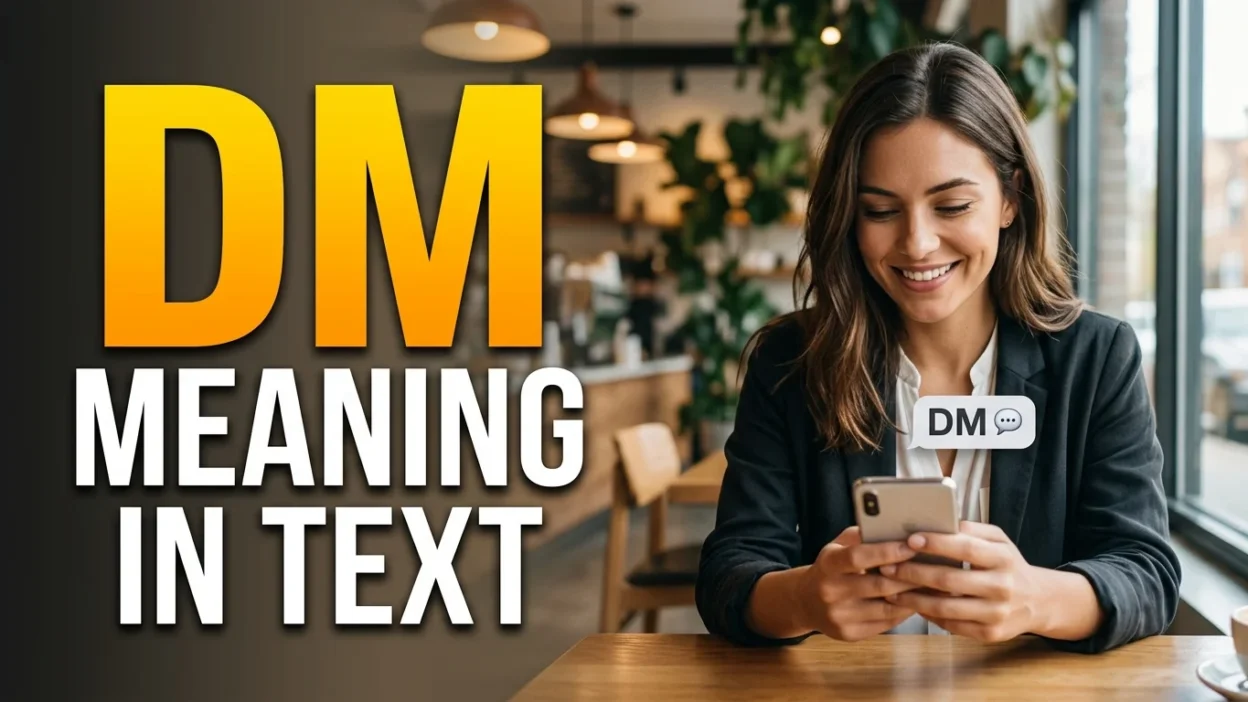
“DM” stands for “direct message.” It refers to a private message sent between users on a platform, separate from public posts or comments, and it’s used both as a noun and a verb.
What Does “DM” Mean?
“DM” is short for “direct message.” Each letter stands for one word in that phrase.
In plain English, a “dm” is a private message sent directly to someone, usually through a social media platform, rather than posted publicly for everyone to see. It’s also commonly used as a verb, as in “I’ll dm you,” meaning “I’ll send you a private message.”
The literal meaning and the common meaning are basically the same here. There’s no hidden layer to figure out, “dm” simply refers to private, one-on-one messaging on a platform.
Meaning in Different Contexts
The meaning of “dm” stays consistent across nearly every platform, though how it’s used can shift slightly depending on where you see it.
Everyday Conversation
In spoken conversation, people commonly say “I’ll dm you” or “check your dms” out loud, since the term has become so widely understood that it works both in speech and text.
Text Messages
In regular texting, “dm” is sometimes used to refer to switching a conversation from a public platform to a private one, like “dm me so we can talk more.”
Social Media
On platforms like Twitter/X, “dm” is one of the most commonly used terms, often appearing in replies like “dm me for details” or “just sent you a dm.”
Since WhatsApp itself is a private messaging app, “dm” is used less often here, though people might still reference “dming” someone when talking about messaging across different platforms.
Snapchat
On Snapchat, private messages are usually just called “chats,” but “dm” still gets used occasionally, especially by users who are active across multiple social platforms.
Instagram is one of the biggest places “dm” gets used, both as a feature name (Instagram DMs) and casually in comments, like “dm me for prices” or “slid into your dms.”
TikTok
On TikTok, “dm” is extremely common in comments and captions, especially when creators invite followers to message them privately for collaborations, questions, or business inquiries.
Gaming
In gaming chats, “dm” can occasionally refer to direct messaging a teammate or friend outside of the main game chat, especially on platforms like Discord.
Professional Communication
“DM” has actually become acceptable in some casual professional settings, especially on platforms like LinkedIn or in workplace chat tools, where “I’ll dm you the details” is now fairly common.
Internet Slang
Within internet slang, “dm” is one of the most universally recognized terms, right alongside abbreviations like “lol” and “brb,” since nearly every major platform has some form of direct messaging.
Examples of “DM”
Here are real-life examples of how “dm” gets used in everyday digital conversations.
1. Sentence: “dm me your address so I can send the package.” Meaning: Asking someone to send private information through a direct message. Situation: Coordinating a delivery or gift between friends.
2. Sentence: “just sent you a dm about the project.” Meaning: Letting someone know a private message is waiting for them. Situation: A workplace conversation on a messaging platform.
3. Sentence: “he slid into her dms after seeing her post.” Meaning: Describing someone reaching out privately, often used in a romantic or flirty context. Situation: Friends discussing someone’s dating life.
4. Sentence: “dm for collab opportunities.” Meaning: Inviting people to reach out privately about working together. Situation: A creator’s social media caption or bio.
5. Sentence: “check your dms, I sent you the link.” Meaning: Letting someone know important information is in their private messages. Situation: A quick note left in a public comment or group chat.
When Do People Use “DM”
People use “dm” whenever they want to move a conversation from public view to a private, one-on-one message.
It’s used across all age groups, since direct messaging exists on nearly every major platform, from social media apps to workplace tools. Businesses, creators, casual users, and even companies use “dm” constantly in customer service contexts.
People use it because it’s quick, and it clearly signals that the conversation should move somewhere more private. Typing “dm me” is much faster than explaining “please send me a private message.”
It’s appropriate in casual conversations, social media captions, business inquiries, and even semi-professional messaging. It becomes slightly less appropriate only in very formal writing, like official documents or highly professional emails.
Different Meanings of “DM”
While “direct message” is by far the most common meaning, “dm” does have a few other uses worth knowing.
1. Direct Message (Most Common Meaning)
- Definition: A private message sent between users on a platform.
- Context: Social media, texting, workplace chats.
- Example: “dm me if you have any questions.”
2. Dungeon Master (Gaming)
- Definition: In tabletop role-playing games like Dungeons & Dragons, “DM” refers to the person who runs the game and guides the story.
- Context: Tabletop gaming communities.
- Example: “our dm planned an amazing campaign for tonight.”
3. Direct Marketing (Business)
- Definition: In marketing contexts, “DM” can refer to direct marketing strategies aimed at specific customers.
- Context: Business, advertising, professional discussions.
- Example: “the company ran a dm campaign targeting loyal customers.”
Context makes it clear which meaning applies. Social media and texting almost always point to “direct message,” while gaming or business conversations can shift to the other meanings.
Origin of “DM”
“DM” as “direct message” originated alongside the rise of early social media and messaging platforms, particularly Twitter, which launched a direct messaging feature that became widely known simply as “DMs.” As the term spread across other platforms like Instagram, Facebook, and TikTok, it became a universal way to describe private messaging online.
Before its social media use, “DM” already existed in tabletop gaming circles as an abbreviation for “Dungeon Master,” a term that predates modern texting and social media by decades.
As direct messaging features became standard across nearly every platform, the social media meaning of “dm” quickly became the dominant, most recognized use of the term worldwide.
There’s no single inventor credited with the social media meaning of “dm,” though its rise closely follows the growth of Twitter and other early social platforms that popularized private messaging features.
Similar Words and Alternatives
If you’ve seen “dm,” you’ve probably also come across similar terms used to describe private messaging.
- PM – Short for “private message,” an older term used mainly on forums before “dm” became more popular.
- Text me – A non-slang alternative used specifically for phone-based messaging.
- Slide into dms – A playful phrase describing sending someone a direct message, often with romantic or flirty undertones.
- Message me – A straightforward, platform-neutral way to say the same thing.
- Inbox me – Another alternative, often used on platforms like Facebook, referring to sending a private message.
The main difference between these terms is mostly platform-specific tradition. “DM” is now the dominant term across most social media, while “PM” is more associated with older forums and messaging boards.
Common Mistakes
One common mistake is assuming “dm” always refers to social media, when it can also mean “Dungeon Master” in tabletop gaming or relate to marketing in business contexts.
Another mistake is using “dm” in very formal writing, like official business letters or legal documents, where “private message” or “direct communication” would be more appropriate.
Some people also confuse “dm” with “pm,” which technically mean the same thing but are associated with different platforms and generations of internet culture.
Tip to avoid confusion: Pay attention to the platform and topic of conversation. Social media and texting almost always mean “direct message,” while gaming or business contexts may point to a different meaning.
Frequently Asked Questions
What does “dm” mean in a text message?
“DM” stands for “direct message,” referring to a private message sent between users, separate from public posts or comments.
Is “dm” only used on social media?
No, though that’s its most common use. “DM” can also mean “Dungeon Master” in tabletop gaming or relate to direct marketing in business.
Can “dm” be used as a verb?
Yes. People often say things like “I’ll dm you” or “just dmed him,” using “dm” as a verb meaning to send a private message.
What’s the difference between “dm” and “pm”?
They mean the same thing, a private message, but “dm” is more common on modern social media, while “pm” is associated with older forums and messaging boards.
Is it appropriate to use “dm” in professional settings?
Yes, in many casual professional contexts, especially on platforms like LinkedIn or workplace chat tools, “dm” is commonly used and understood.
Where did “dm” come from?
The social media meaning grew alongside platforms like Twitter, which introduced a direct messaging feature that became widely known as “DMs.”
What does “slide into someone’s dms” mean?
It means sending someone a private message, often used to describe a flirty or romantic first message sent through direct messaging.
Conclusion
So, what does “dm” mean in text? It stands for “direct message,” a private message sent between users on social media, texting apps, or messaging platforms, separate from public comments or posts.
While “direct message” is by far the most common meaning, “dm” can also refer to a Dungeon Master in tabletop gaming or direct marketing in business contexts, so paying attention to the setting helps avoid confusion.

Hi, I’m Ethan Carter, a writer at Meanhubz.com. I enjoy explaining words, phrases, slang, and everyday expressions in a simple and engaging way. My goal is to help readers understand language clearly, improve their English, and communicate with confidence through practical examples and easy-to-follow explanations.